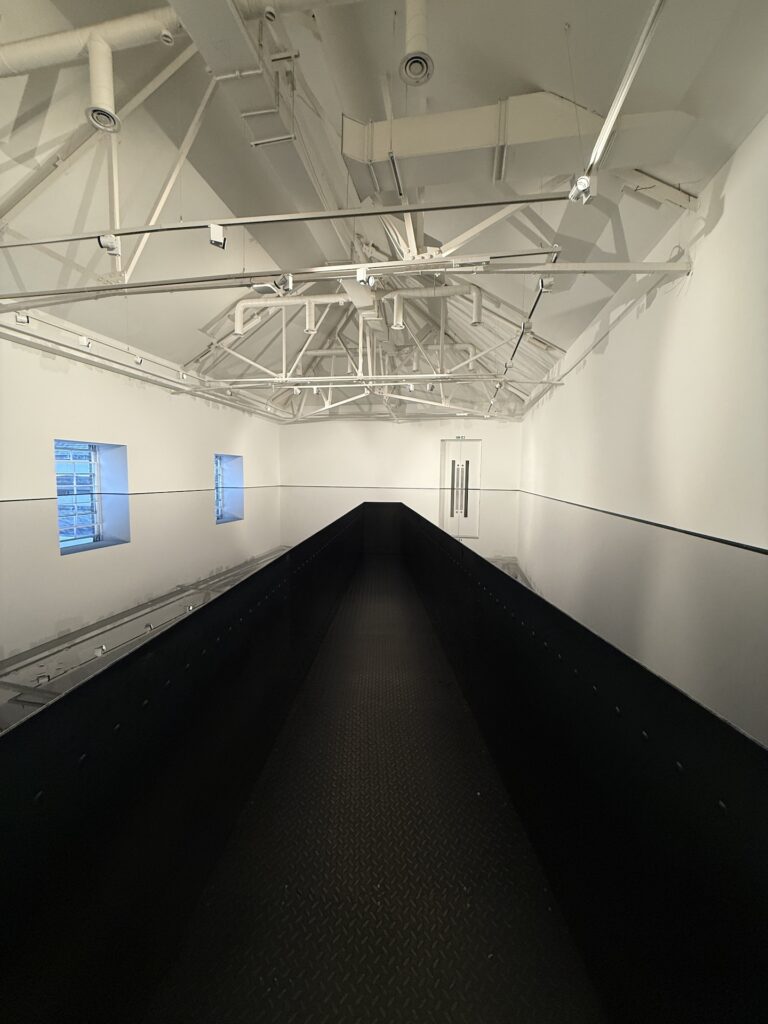
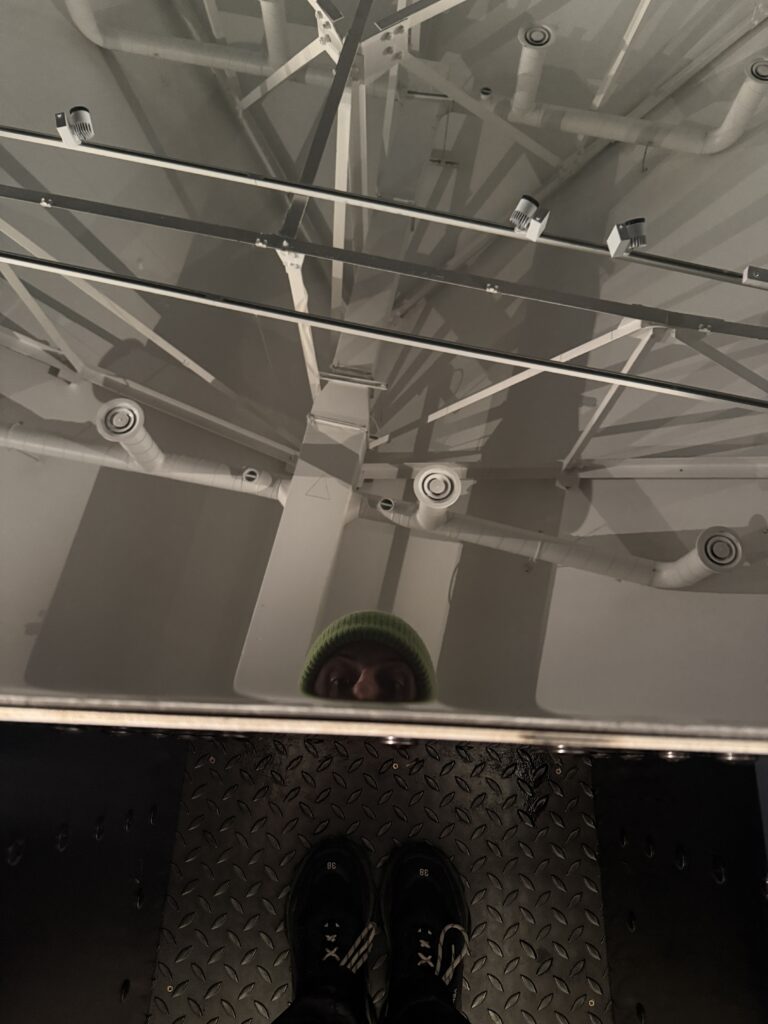
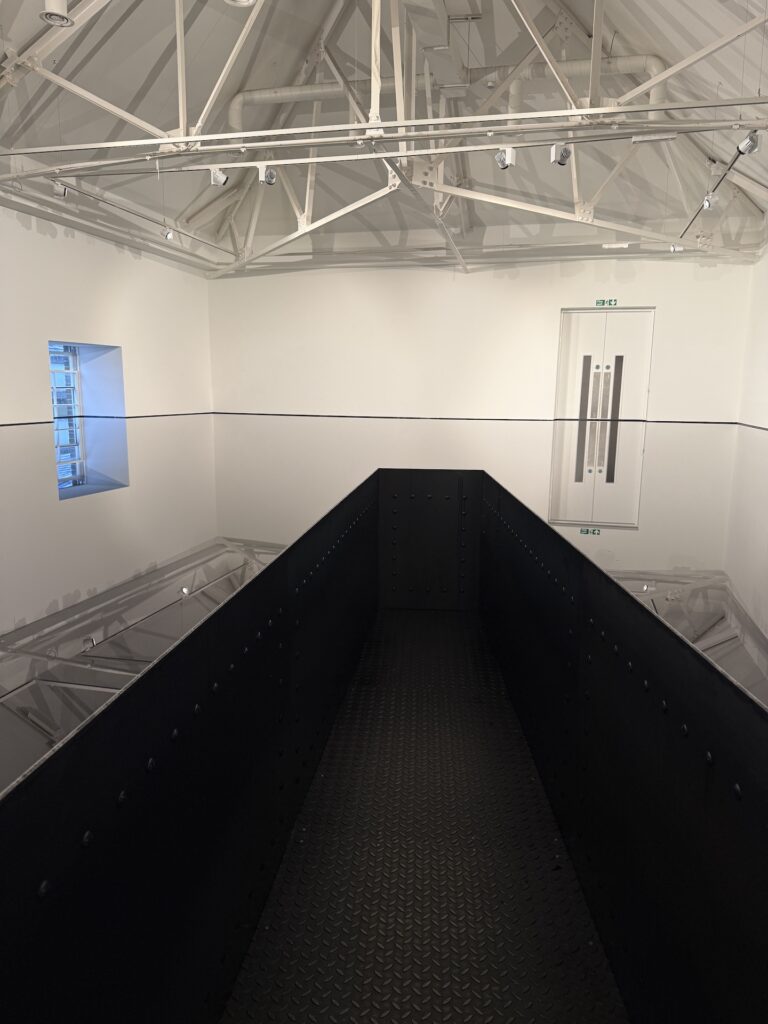
I’m feeling inspired by so many unbelievably amazing pieces from this exhibition!!! Starting with the monumental pieces, which I saw at the end but somehow they got stuck in my head the most: Richard Wilson’s 20:50, which was originally created in 1987 but it is still, or probably even more so now, incredibly relevant, not just the daunting blacker than black depth of the surface but what affected me the most was the smell, which I could sense as soon as I entered the space 2 rooms ahead of the 20:50 room and could immmediately smell what felt like I was on a street in Bangkok during the worst smog. I mean the smell was so strong, I immediately thought someone spread it there on purpose, not realising it was coming from the 20:50 oil. Another thing about this piece were the dripping lines of oil, which were probably coming from the top of the surface moving slightly but I immediately felt scared that the screws are loosening and the iron walls are about to burst and the hectoliters of oil will now spill and cover everything in the Gallery. Apocalyptic.
Originally created in 1987 and now considered one of Britain’s most iconic installations, 20:50 holds up a reflection of ourselves and the world we inhabit. In today’s climate crisis, this room, filled with recycled sump oil (the thick black engine oil drained from vehicle engines) becomes a meditation on consumption and environmental uncertainty. Its title refers to the grade of the oil itself, but the experience it creates is far from industrial, prompting us to consider the coexistence of material excess and ecological fragility in the reality we live in today.
20:50 gathers the themes of the exhibition into one immersive encounter. The still surface captures a tension between presence and absence, beauty and unease, inviting us to pause within a moment of disorientation and reflection. Like the exhibition as a whole, Wilson’s work reminds us that art does not simply record its time but unsettles it, offering new ways of seeing ourselves and our future. It is both an ending and a beginning – a space to reflect on forty years of the Gallery’s history while looking ahead to the possibilities that lie beyond.
Another very touching piece, by RAFAEL GÓMEZBARROS Casa Tomada (House Taken), 2019
Resin, fibreglass, wood, screen-cotton, rope, sand, and Cerrejón coal
Rafael Gómezbarros (b.1972, Santa Marta, Colombia) addresses the fragility of the human condition and the history of violence in his native Colombia. Since its conception in 2008, Casa Tomada (House Taken) has been exhibited across the world – first displayed at Saatchi Gallery in Pangaea, (2014). It’s title references the 1946 short story by Argentinian author Julio Cortázar, in which a house is gradually taken over, prompting the occupants to flee. Central to the artist’s work is migration and forced displacement of human beings, originally made in response to the Colombian Civil War. Gómezbarros fashioned the ant bodies from casts of human skulls, which are covered with Colombian sand and bound together using strips of cotton from T-shirts, commonly worn by Colombian farm workers. The ant legs are made from the fragrant branches of the Jasmine tree. During the civil war, such branches were used to mask the smell of the bodies of victims.
I felt very touched by looking at the piece but I became increasingly moved when I read the text and became aware of the meaning and the choice of elements used to create this piece. I felt overwhelming sadness and simultaneously was captured by the attention to detail and finishing, I was especially fascinated by the fact that every element of the ant has it’s own story, and that makes the whole piece so much more powerful.


There were many other wonderful pieces, the ones about ecological and human crisis resonated the most, some others were fascinating visually but I didn’t feel emotionally connected to them
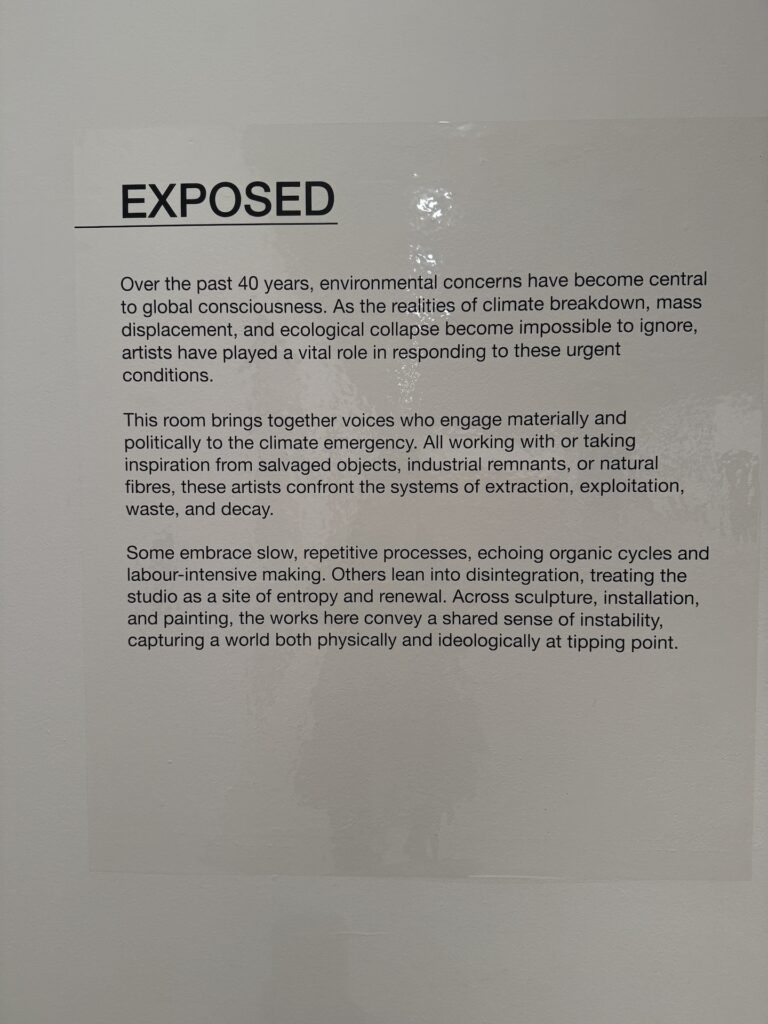
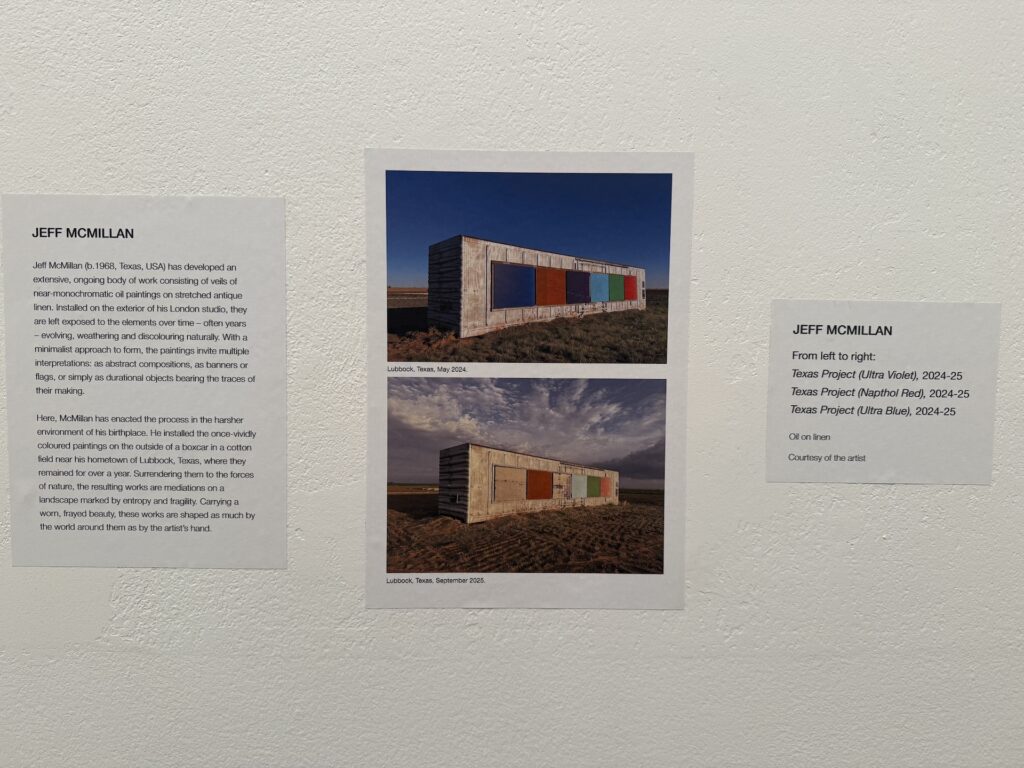

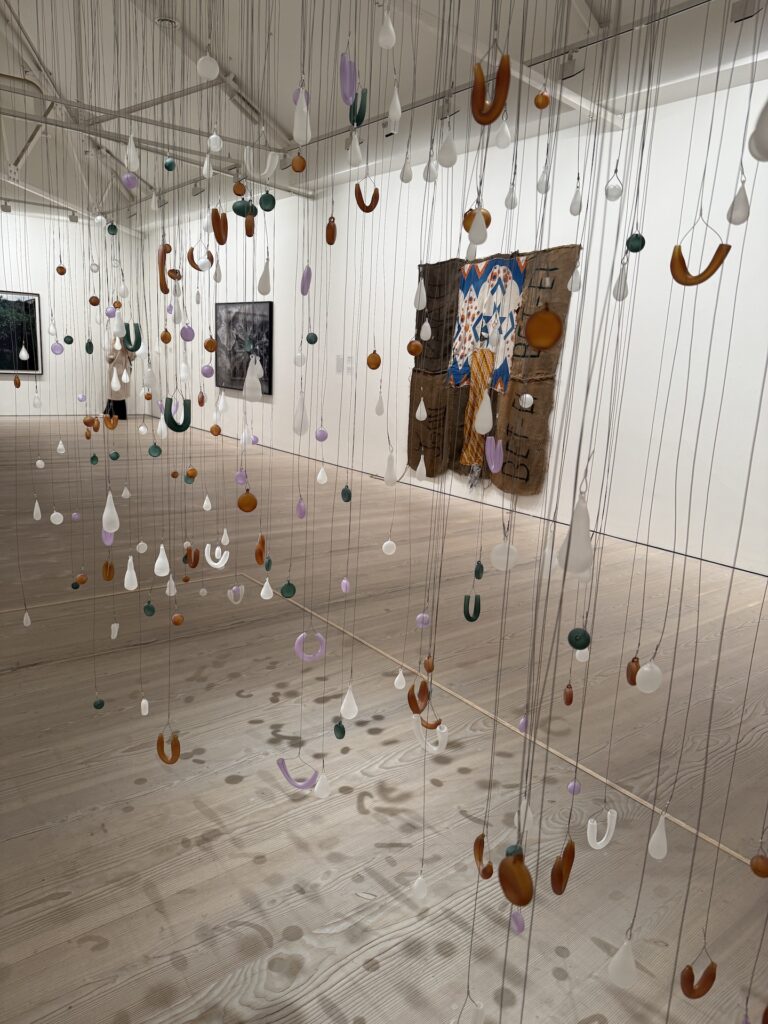
Loving the connection between nature and human body, something hopeful among the apocalyptic visions of the end of the world being around the corner

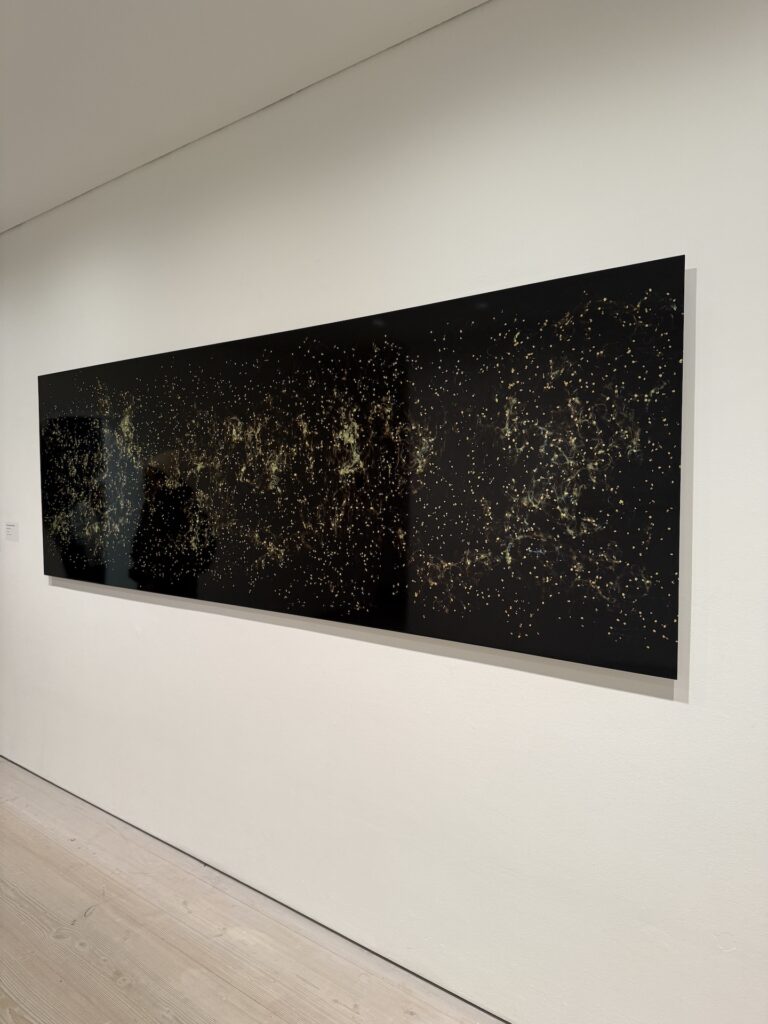
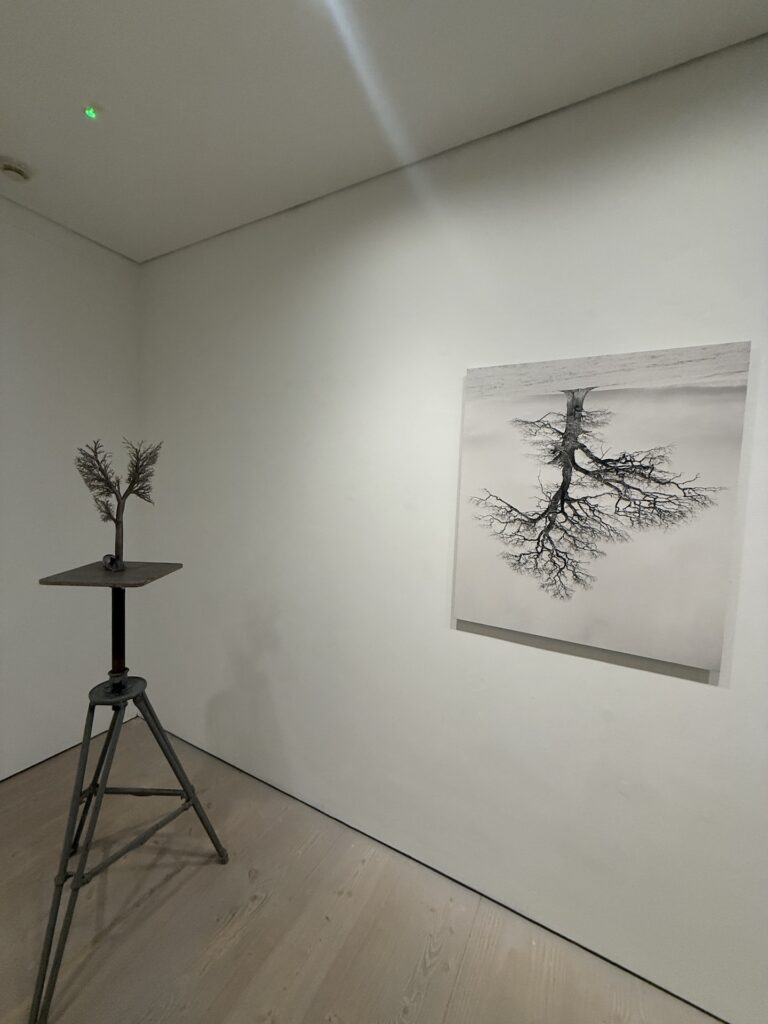
The absolute end of the world depressing visions, which are supposed to also symbolize a chance for rebirth, they are devastatingly beautiful in their apocalyptic simultaneously tragic and magical landscapes
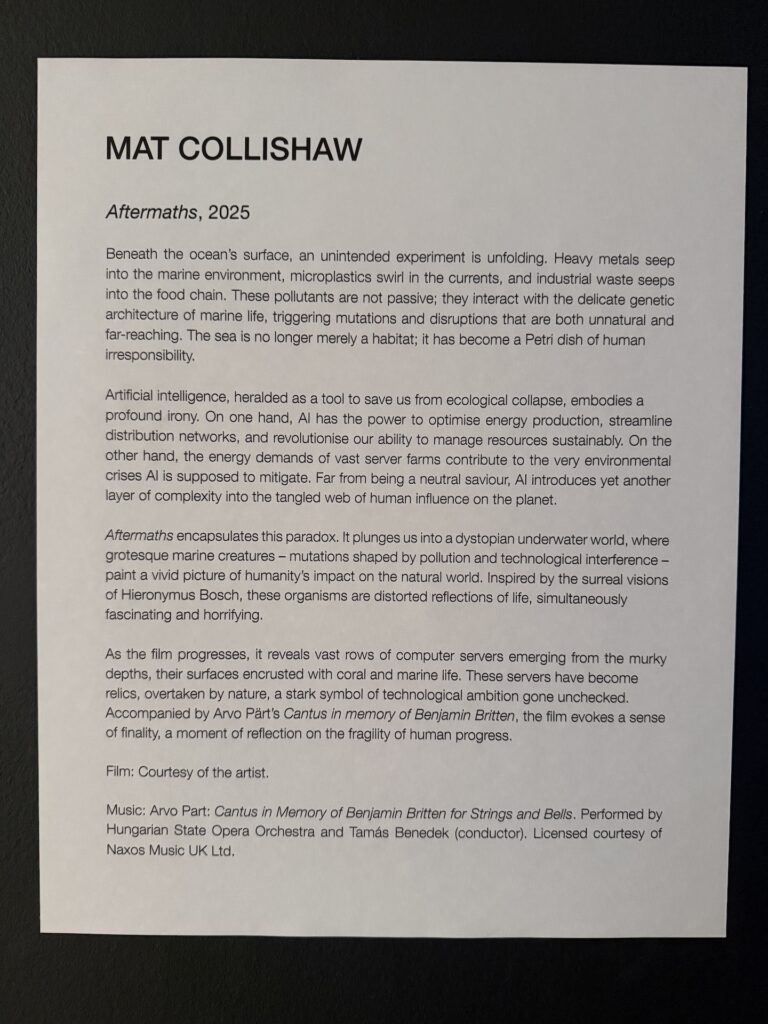

THE WORKS THAT GENERATE HOPE AND FEEL PLEASANT, ASMR & MAGICAL
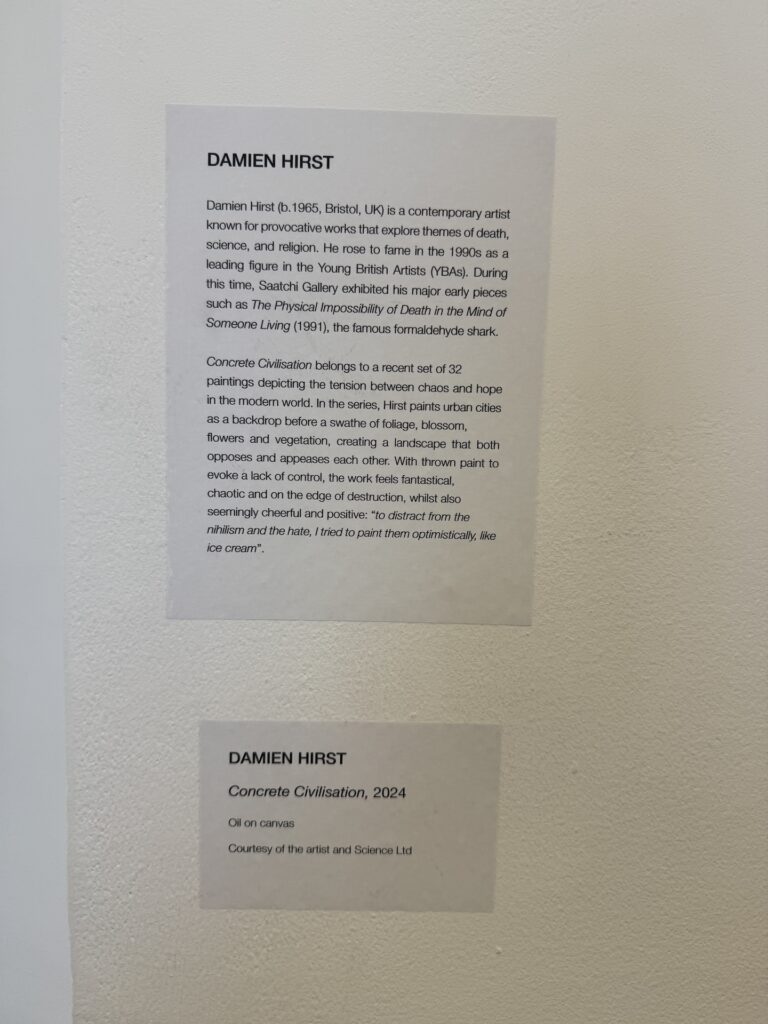
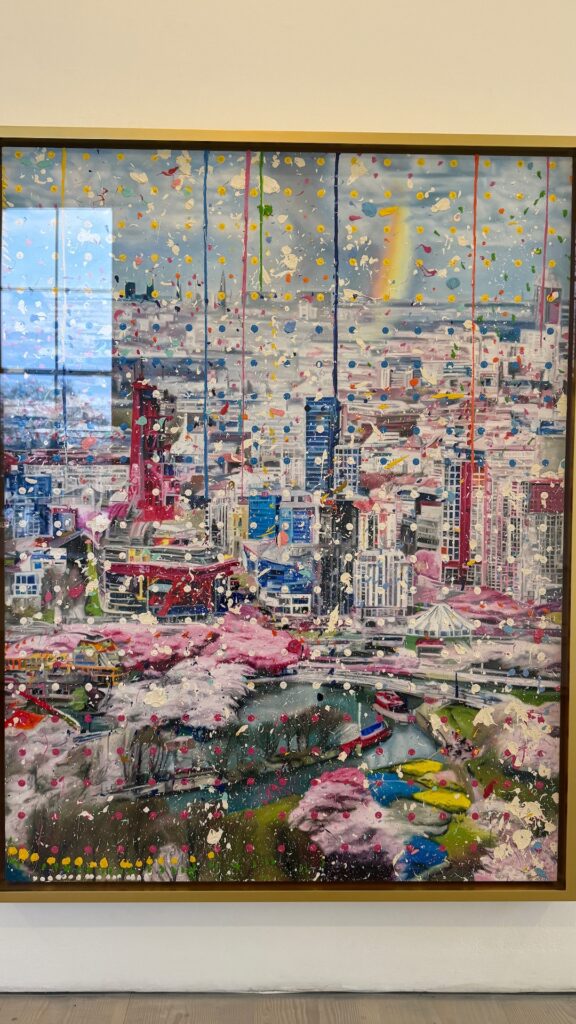
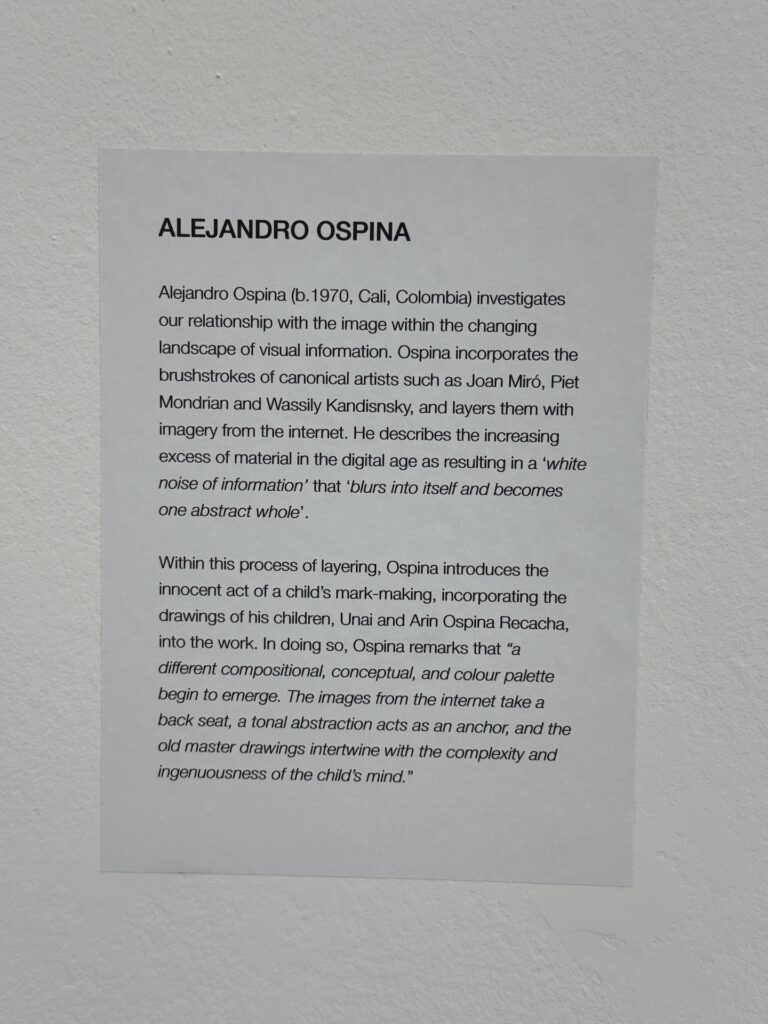
Funnily enough, as soon as I saw Alejandro Ospina’s paintings, I felt a rush of excitement to see the work of a friend and neighbor from my studio space. As I met him right before Christmas during open studios, I passed him multiple times in the studios corridor. I got to see his beautifully lit massive studio and heard the story of the projector and how he projects his kids drawings onto his paintings. And what surprise and joy and pride I felt when seeing his works at Saatchi!!! Bravo Alejandro. I feel uplifted and relaxed by the works of Damien Hirst and Alejandro Ospina, they’re pleasant to watch. Hirst’s idea to mix urban cities with flowers and vegetation in order to “distract from the nihilism and the hate” by painting “optimistically, like ice cream” and Ospina’s layering of Miro, Mondrian and Kandinsky with imagery from the internet and incorporation of drawings by his children to introduce “innocent act of a child’s mark-making” are all great ideas but for some reason to me personally they lack the emotional weight and depth. I am unable to connect these to my own inner turmoil and I see them as “designed” and caltulated rather than motivated by true internal struggle and reaction to what is happening in the world. I feel both of them are looking for admirers rather than people, who will think: I connect with this piece on a deeper level. I myself feel torn when it comes to choosing my path: do I want to/have the courage to take feminist and political route, following the situation in the world and reacting to it through my work, or do I want to remain slightly ignorant and detached and focus on calculated exploration of a particular style or technique? And another question: how much apocalyptic news and immersion into the heaviest subjects am I able to handle before becoming depressed?