TATE MODERN: NIGERIAN MODERNISM
Ben Enwonwu
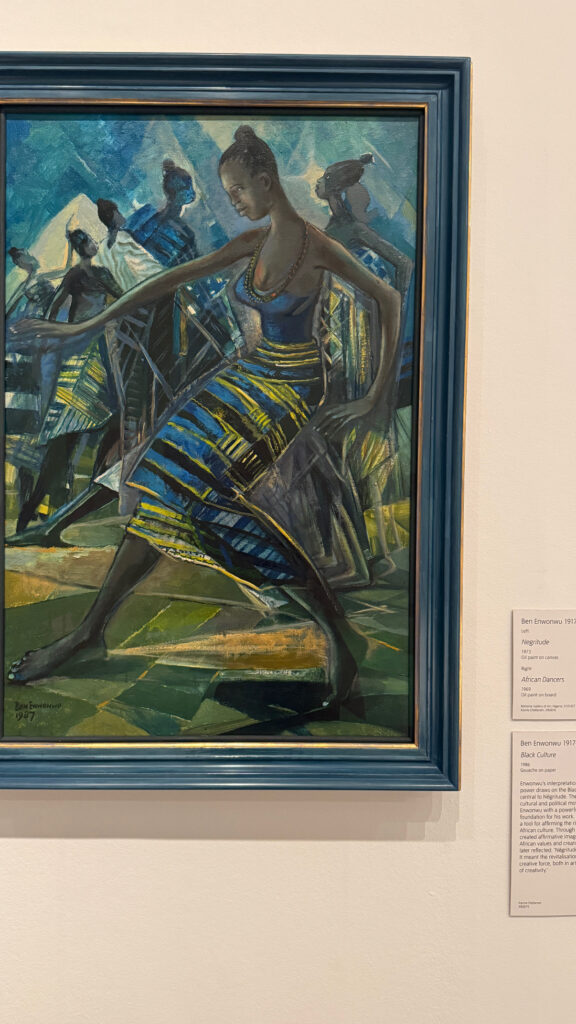
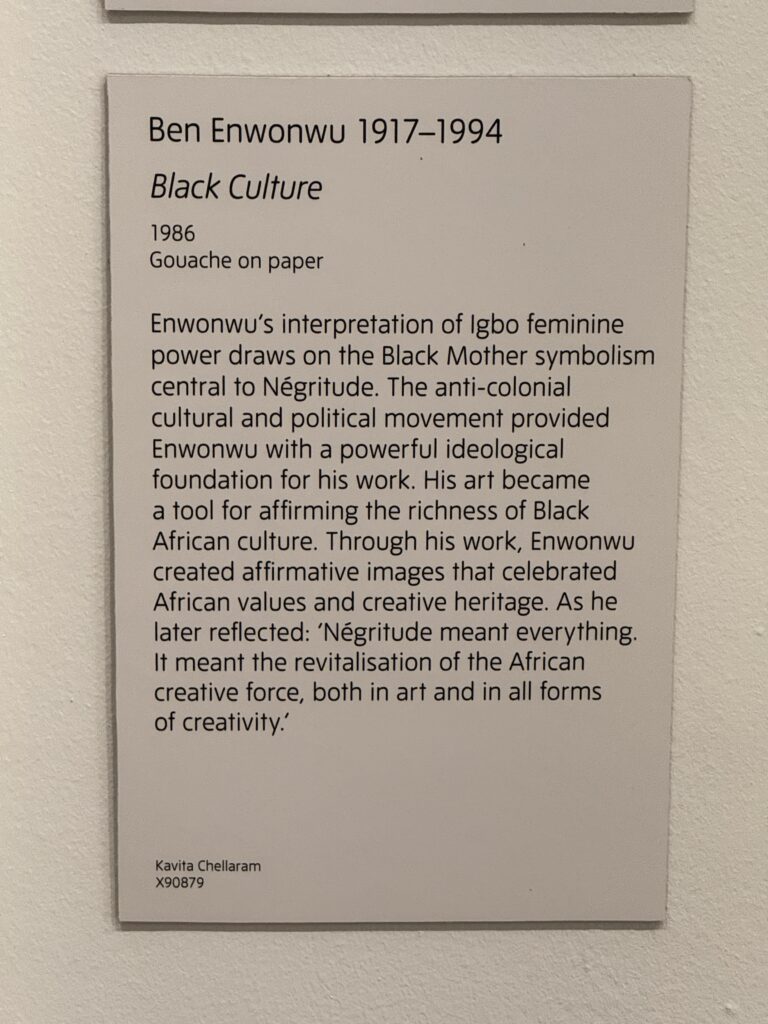
„Nigerian Modernism: maternal figures as symbols of strength, continuity and transcendence”
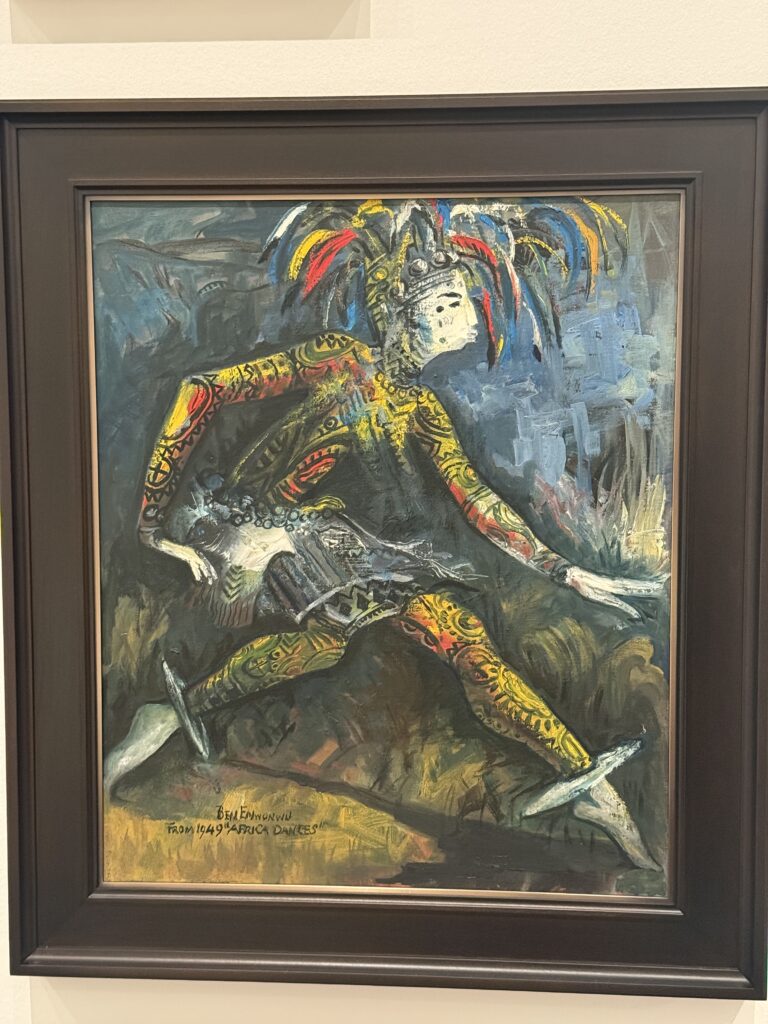
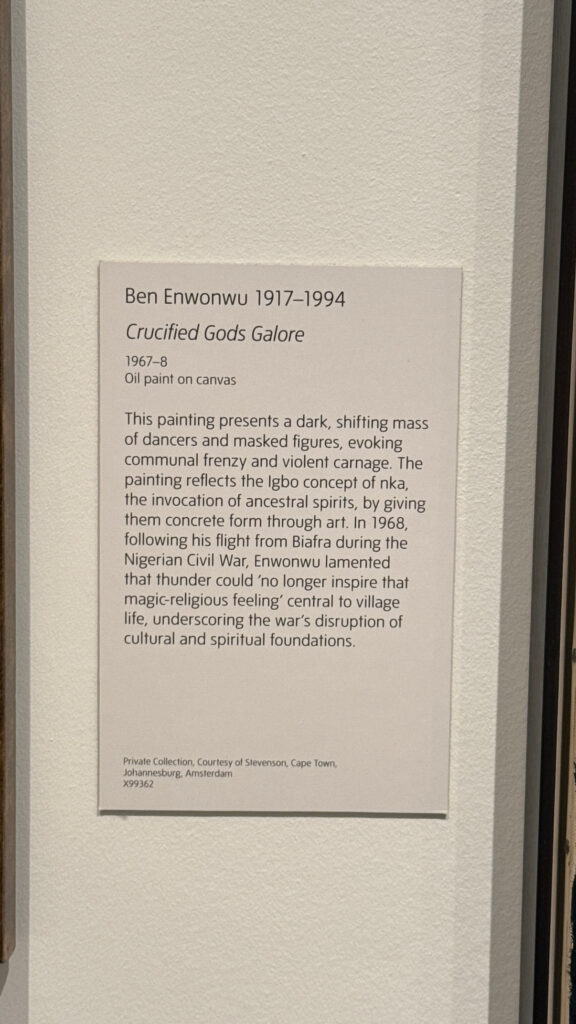
„Art invokes the spirit world by giving it form”
„Overlapping figures in identical poses to create rhythmic patterns”
„Compositions marked by flowing, rhythmic lines and simplified human forms”
Shocking:
The Adanma masquerade is performed exclusively by men as part of Igbo cultural tradition, which generally limits all masquerade activities to male participants.
Key reasons for this tradition include:
- Masquerade as a Male Domain: In Igbo culture, masquerades (Mmanwu) are fundamentally a male practice, and their creation, care, and performance are typically restricted to men who are initiated into exclusive secret societies.
- Representation of Spirits: Masquerades are traditionally believed to represent ancestral spirits or deities, and only men are permitted to embody or interact with these spirits directly within the ceremonial context.
- Performance of Femininity: The Adanma, meaning “beautiful woman” or “first beautiful daughter,” is a maiden spirit mask designed to idealize and display female beauty, grace, and elegance. Men wear the mask and costume to imitate these feminine attributes through dance, a performance of gender identity within a traditional framework.
• • Cultural Rules: Specific, strict rules govern gender interaction with masquerades in Igbo society. Women are traditionally prohibited from touching the masks or understanding the full spiritual meaning behind them, though they can observe the performance from a distance and participate in the cheering.


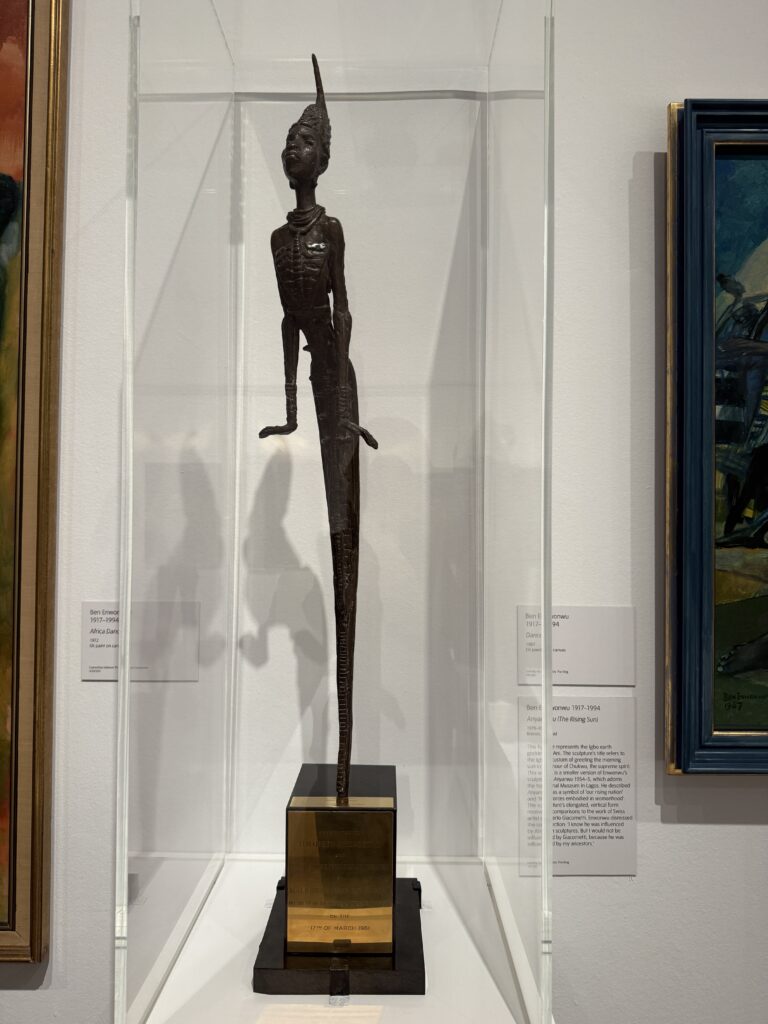
TATE MODERN GIACOMETTI SCULPTURES EXHIBITION:
Alberto Giacometti 1901-1966
Born Switzerland, worked France and Switzerland
Femme debout c. 1958-9, cast 1964
Standing Woman
Femme debout c. 1958-9, cast 1964
Standing Woman
Femme, épaule cassée c.1958-9, cast 1964
Woman with a Broken Shoulder
Bronze
Purchased with assistance from the Friends of the Tate Gallery 1965
T00775-7
During the late 1950s, Giacometti made a number of fragmentary figures with their arms partly or entirely missing. Their slender forms appear vivid yet fragile. The writer Jean Genet (1910-1986) commented:
The resemblance of his figures to each other seems to me to represent that precious point at which human beings are confronted with the most irreducible fact: the loneliness of being exactly equivalent to all others.’


