As I am planning to turn my fridge door MOTHERCORE 01 into an acrylic painting on canvas combined with embroidery, I firstly want to test what it will look like on a surface differend from fridge doors. I found it very difficult to find the right shade of red paint as I wanted it to be as vibrant as possible and didn’t know that the main difference between “student” 2GBP paint and a “professional” 14GBP paint is the vibrancy that comes from the presence and amount of pigment used. According to Liquitex website “HUE COLORS: A color that has hue in its title is one that recreates another color for some reason. For example, a cadmium hue will be a paint that looks like cadmium but doesn’t actually contain cadmium, just a blend of other pigments. Hues are useful when you’re on a budget as they are usually in a lower series, and they can be recreations of colors that are now deemed unsafe, too expensive or fugitive.” I understand the safety but still can clearly see the difference between the Hue and the Cadmium red with pigment, which just looks sooo much better and more vibrant!
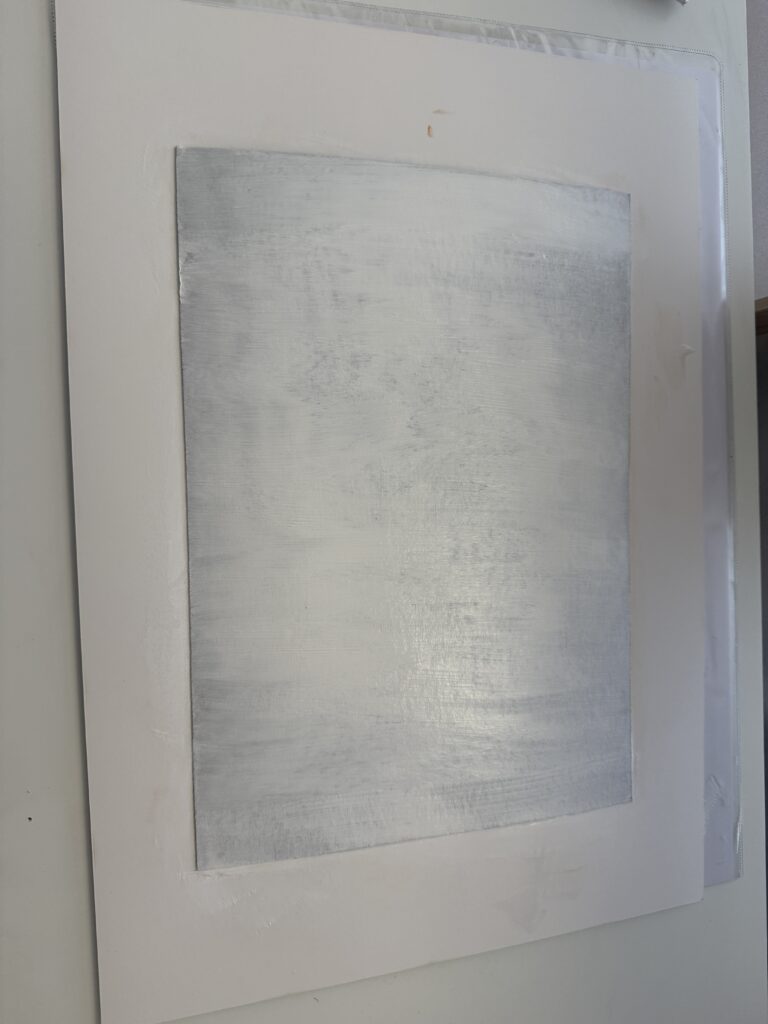
- I primed a cardboard with liquitex glossy medium and then covered it in white acrylic gesso
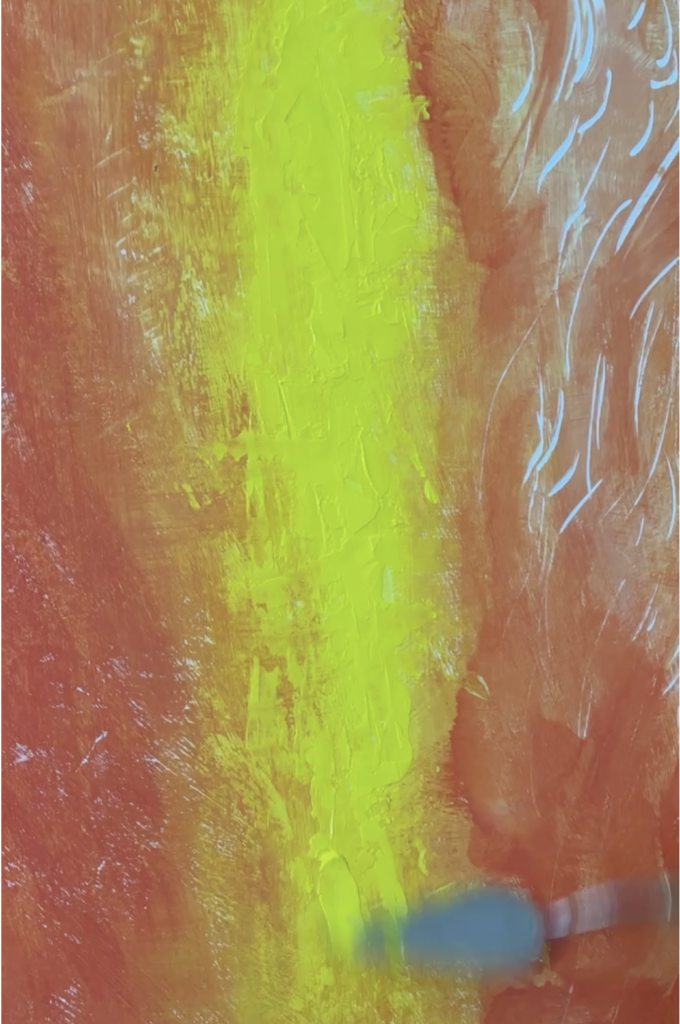
- I made sure to only use acrylics this time, but to try out the cheaper Schnincke and expensive Liquitex for comparison
Mistakes: I didn’t wait long enough for the gesso to dry and when I started painting the orange mixed with white, which resulted in a cloudy/non vibrant colour, which I had to cover up with multiple additional layers. Also: I didn’t sand and that’s not. a mistake but I need to consider if I want a smoother surface or textured before I paint the 70 x 100 piece
What I will do differently: wait longer for the primer gesso layer to dry – check how long? 24h
I really enjoyed starting light and then becoming braver and adding thicker layers of paint, mark making in the paint as well as in the end squeezing the paint out straight from the tube onto the piece and working it with the knife. Seeing resemblance between mine and Olivia Bax’s piece.

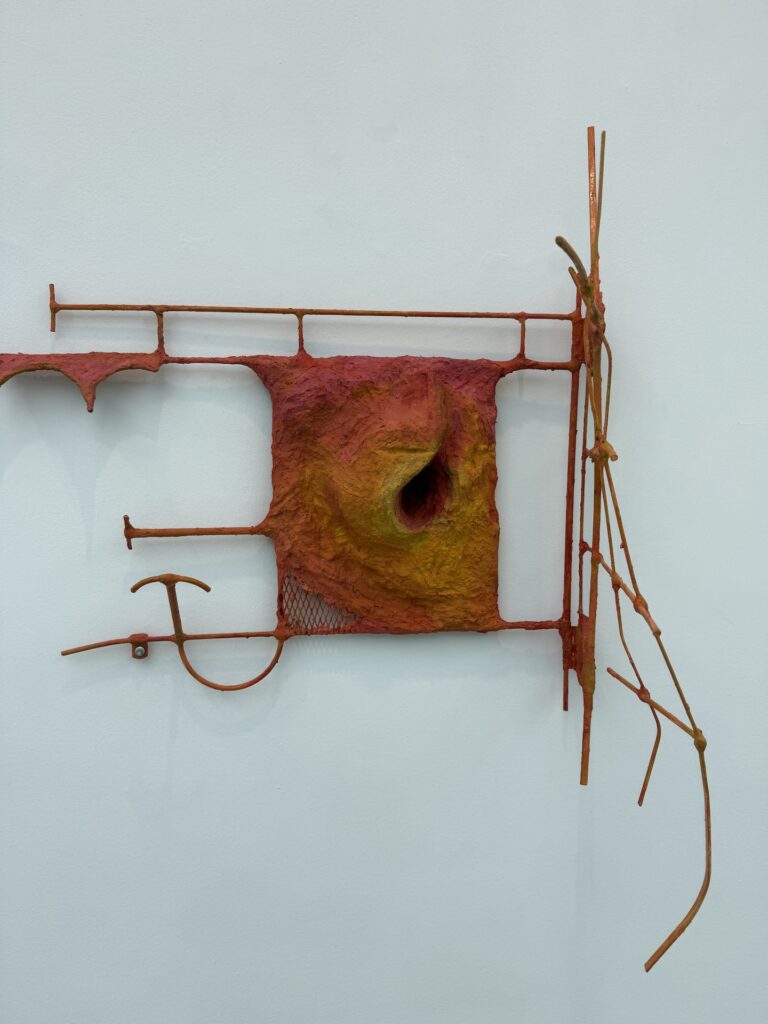
Olivia Bax is a sculptor from Singapore whose work “assembles found and made objects into intricate ensembles. Using metal armatures, chicken wire, cardboard and paper pulp, she merges construction, welding and modelling. Her forms often recall conduits – pipes, funnels, tubes, chutes – evoking transfer, flow and direction. Hooks, handles and holding devices introduce ideas of relationship and connection, while juxtapositions highlight difference. Bax encourages viewers to puzzle over these material dialogues, where objects fold into each other and tensions are bound by improvised seams. The compositions carry a deliberate awkwardness – asymmetries and precarious balances that feel carefully staged. Bax’s environments read as nesting structures, habitats or spatial orbits shaped by bodily gestures, sitting, reaching, leaning, holding. Her work conjures fantastical yet grounded spaces, inviting us to reconsider how forms connect, contain and interact”