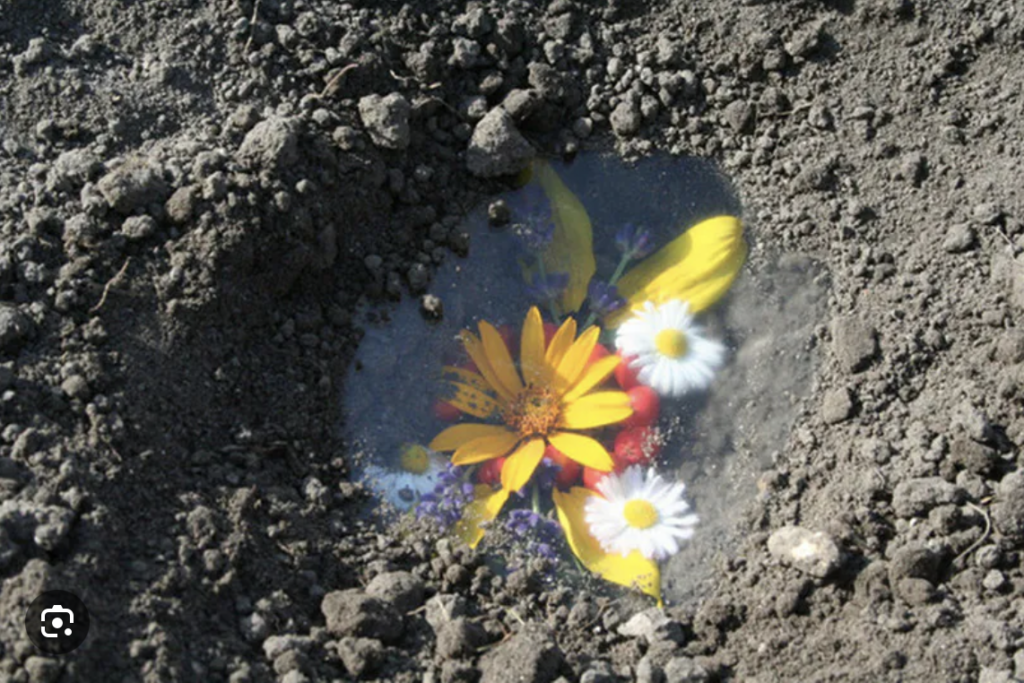
Based on the idea of continuing my Autoetnographic journey, as well as my constant “journey” through conversations with my mum and going back to memories of creating without access to abandom=nment of plastic, western toys, and looking at other ways of expressing our creativity through collective play.
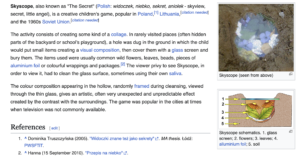
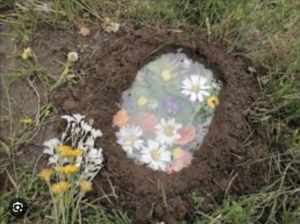
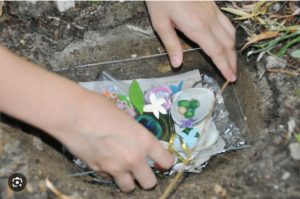
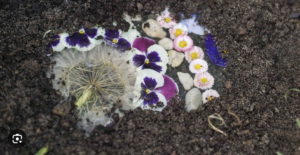
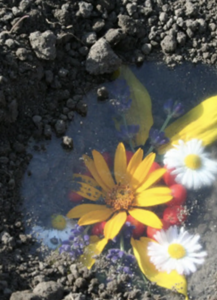
- Widoczki (Skyscopes) – remembering simple natural ways of interaction: finding pieces of broken glass, fllowers, beads, grasses, pieces of metal, candy wrappers, making little collages in soil behind building or at allotments, covering those collages with pieces of broken glass bottles and covering with soil. Then coming back, digging through soil and finding the “widoczek” I made or realising it has dissapeared or has been dismantled only to find another one in it’s place, made by someone else. Another name for Widoczki was Sekrety – Secrets

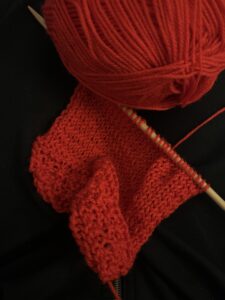
2. KNITTING – In response to assesment: “To what extent could you retreat, retreat from the energetic drive to show work?
Is there value in focusing in on your own making process?
sit with it
take time
reflect”
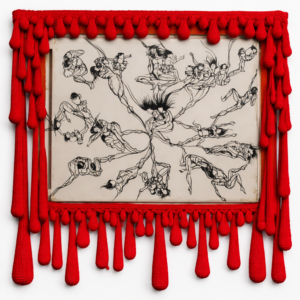
Attempting to remind myself how to knit and crochet, understanding how different stitches can help me to shape the knitted piece into tears, thinking of Tracey Emin’s Tears of Blood and Ema Shins Hearts of Absent Women. Wondering how I can express the sadness related to the absence of women in the world of men, the female guilt for being called ‘the sponging gender” by a candidate for Reform UK (Deficit. The hidden value of Care, pg.4). Thinking about my Maiden painting, part of Matrescence: Maiden. Mother. Crone triptich, and people who responded at it thinking it was dripping in blood, thinking about the amount of tears and blood my grandmother, her mother and previous generations of women had to shed so my and my daughters generations could have the freedom to express ourselves creatively. While also feeling the constant guilt for either being not good enough mother or not good enough artist.

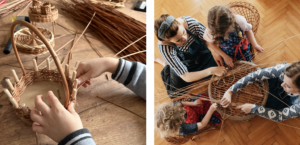
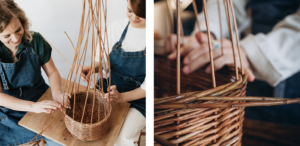
3. WIKLINA – BASKET WEAVING – signed up for basket weaving course and will continue working on the base for Motherlamp. I want to spend Easter and half term working on the base of the lamp
BASKET CASE
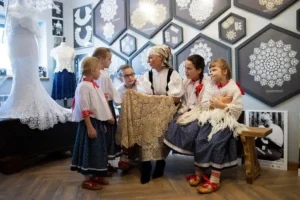
4. Hopefully, if the lace scraps from Poland arrive on time, I will start stitching “imperfect” and “faulty” lace pieces acquired from female lace artists from the polish mountain city of Koniakow onto my lamp base. Koniaków lace has been inscribed on the UNESCO Intangible Cultural Heritage List for it’s incredible, complex patterns. I have been fascinated with lace from this region ever since I moved out of Poland and felt incredibly homesick when living in LA or NY, coming back to Poland for Xmas and Summer, often visiting the mountains with my current husband, then boyfriend, listening to polish folk music he introduced me to on the NY subway. For ma final BA show at Otis College I have created entire garments made from this lace and I somehow feel like now might be the time to return to it. However this time I don’t want to make perfect garments, designed very carefully with very specific functional and eye pleasing perfect firt garment in mind. I don’t want to create carefully measured paper patterns. I don’t want to hide the imperfections, I don’t want to please the audience with “prim and proper” pretty decorative laces. I want to embrace the flaws in the lace and in myself for myself. I want to express how the drive for perfection and beauty, virtue and obedience placed by the demands of the polish catholic church on polish women is how we got lost in the first place. And how finding true power lays in being honest with ourselves, accepting ourselves for who we are rather than permanently striving for perfection and order both in the way our bodies look, as well as inside, with the permanent cleaning up of the world around us. Honing the craft rather than dismissing its value is what will help us to not be forgotten, not our beauty, not our obedience to church, men, founding fathers, economists, which catholic religion and polish catholic church require from women.


And while I’m knitting, crocheting, stitching lace and sewing I’m waiting, waiting to understand why I’m really doing all this. Maybe to feel a relief from the guilt related to my gransmother’s death or maybe to feel less guilty when it comes to inspiring my daughter to do art. To repeat Viktor Navorsky’s words from Terminal(2004): “We all wait for something”
Waiting for judgement day
Useful quotes from Woman Question: 1550-2-25 exhibition at MSN Warsaw

LUCJA MICKIEWICZ
(1894-1979)
NA WYSTAWIE RZEZB
DUNIKOWSKIEGO
AT AN EXHIBITION OF DUNIKOWSKI’S SCULPTURES
OK./CA. 1965
“Mickiewicz was born into a poor peasant family. Although she had earned her living with embroidery her entire life, when, after retiring, she began creating embroidered pictures, she was initially reluctant to sell them, not considering her “needle-painted” works to be “real art.” Her combination of materials-embroidery with silk and cotton thread, wool yarn, and purl-in turn, enabled her to play with light and texture. The famous colorist painter Artur Nacht-Samborski remarked that he would “without hesitation give her a diploma in painting for these works.”
haft nitka baweiniang na tkaninie tiulowej – cotton thread embroidery on tulle fabric
Panstwowe Muzeum Etnograficzne w Warszawie – State Ethnographic Museum in Warsaw
I DO NOT WANT MY GRANDMOTHER TO BE “THE UNKNOWN ARTIST” Her name was Krystyna Kępińska and I want the world to remember
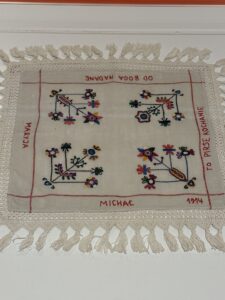
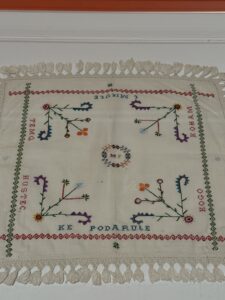
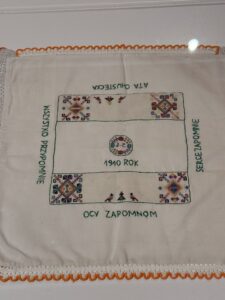
NIEZNANY ARTYSTA/UNKNOWN ARTIST
1. CHUSTECZKA/HANDKERCHIEF 1914
2. CHUSTECZKA/HANDKERCHIEF 1910
3. CHUSTECZKA/HANDKERCHIEF
In the early 20th century, a fashion developed in the Opozno region for embroidered handkerchiefs trimmed with crochet as an important element of courtship. In addition to decorative patterns, they were embroidered with sentiments about love and fidelity, along with the dates and lovers’ names or initials. These “flirtatious” handkerchiefs were introduced by a young generation of village women who now knew how to write. As girls, they also learned crochet and some embroidery techniques at school rather than at home. Maidens embroidered parade handkerchiefs for their chosen swains, and delivering the handkerchief confirmed their feelings. This custom is echoed to this day in the play of preschoolers accompanied by a song about an “embroidered handkerchief.”
1. plótno bawełniane, nici bawełniane; splot płócienny, haft atłaskowy, haft łańcuszkowy, haft ręczny/cotton canvas, cotton thread; plain weave, satin embroidery, chain embroidery, hand embroidery
2. płótno bawełniane, nici bawełniane, koronka szydełkowa; splot płócienny, haft ręczny, haft krzyżykowy, haft atłaskowy, szydełkowanie/cotton canvas, cotton thread, crocheted lace; plain weave, hand embroidery, cross-stitch, satin embroidery, crochet
3. płótno bawełniane, nici bawełniane, koronka szydełkowa; haft ręczny, haft łańcuszkowy, haft atłaskowy, splot płócienny/cotton canvas, cotton thread, crocheted lace; hand embroidery, chain embroidery, satin embroidery, plain weave
Panstwowe Muzeum Etnograficzne w Warszawie/State Ethnographic Museum in Warsaw