Tate Modern Materials Exhibition
I am becoming increasingly influenced by artists, who tackle isolation, displacement and lack of feeling like they belong to the place they chose/did not choose to live in. Myself having the freedom to travel my parents never had in communist Poland, being “motivated/kicked out” to explore the world and living in 6 different cities around North America and Europe between 18 and 30, finally settling in London “accidentally”, which was initially supposed to be a temporary place, yet constantly travelling either to Bangkok(6 years freelance) or to Poland, as if unable to ever settle to stay in just one place. I was finally bound to London as my children were born here and it felt like the most diverse and open minded place to raise my kids in. I am now analysing the consequences and motivations behind my “displacement by choice” and how that affected my sense of home and belonging
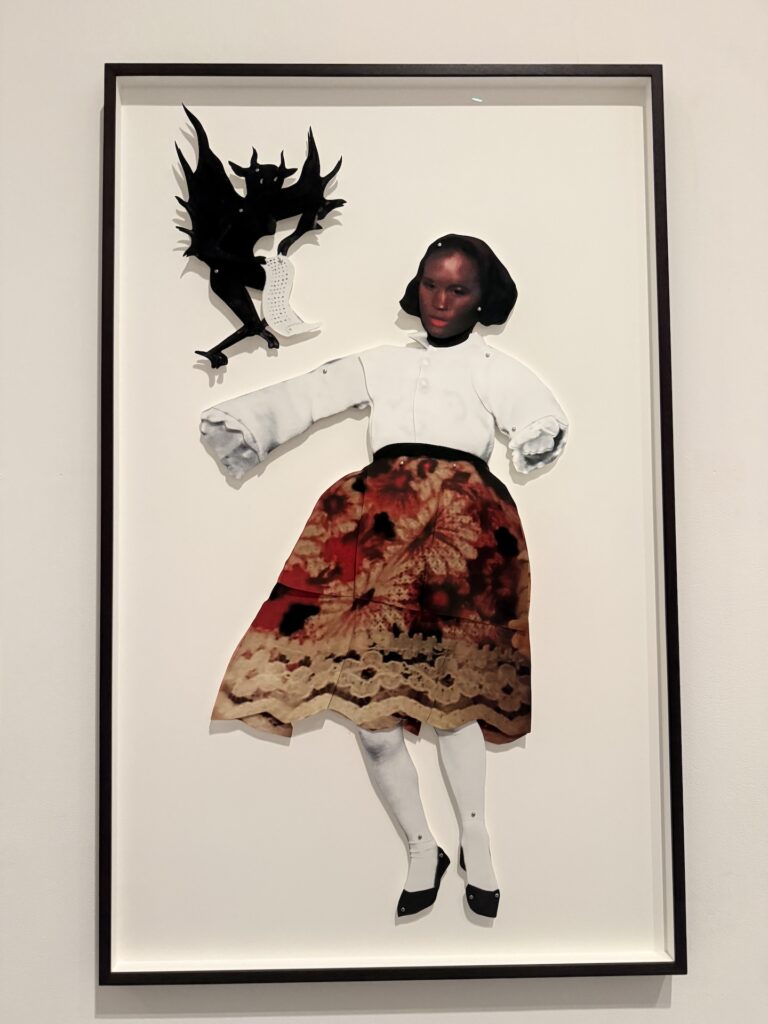
Frida Orupabo 1986, Born and works Norway, “Little Devil” 2022


Photographs, inkjet prints on paper and metal paper fasteners
Orupabo made this collage by cutting out photographic prints of images she found online. She then assembled the figures with metal pins, like paper dolls with moving parts. The ‘little devil’ is inspired by depictions of demonic creatures in religious art from the past. The face of the female figure combines images of a white actress and an anonymous Black woman.
This constructed image reflects Orupabo’s Christian upbringing alongside the pressures and isolation she felt as a Black woman living in Norway.
Purchased with funds provided by the 2022 Frieze Tate Fund supported by Endeavor to benefit the Tate collection 2023 T16155
NALINI MALANI
Nalini Malani’s ‘video shadow plays’ combine video, shadow and sound to tell multiple stories. In this work, she creates a tribute to women’s lives forgotten throughout history.

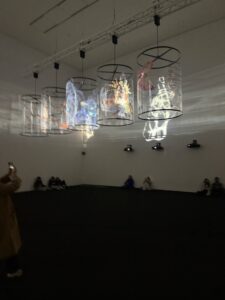
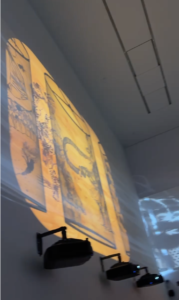
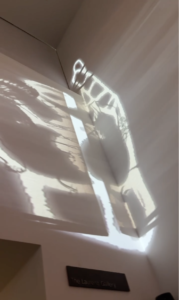
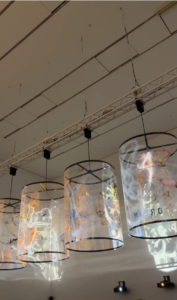
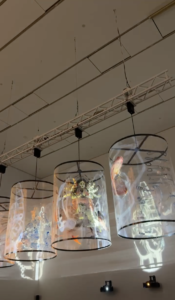
Each cylinder in In Search of Vanished Blood is reverse painted and features images of dispossessed people, mythological figures and surgical instruments. They cast ominous shadows which shift across the projections.
The artist draws inspiration from a range of sources. We hear Cassandra, a figure from Greek mythology who predicts the future but is cursed, so no-one believes her. Referencing texts from German writers Christa Wolf and Heiner Müller, Indian writer and activist Mahasweta Devi, Irish author Samuel Beckett, and others, Cassandra anticipates violence against women during periods of political upheaval. Her story unfolds through stop-motion animations inspired by both historic and recent wartime atrocities.
The title of the work In Search of Vanished Blood is from the poem Lahu ka Surag 1965 by Pakistani writer Faiz Ahmed Faiz. Lines from the poem appear over Cassandra’s veiled face. People who have experienced violence reappear through the endless loops of recurring shadows, creating a sense of lost hope. The sequence ends with a gesture in American Sign Language that expresses a longing for democracy.
Malani’s work reflects her commitment to feminist activism. In Search of Vanished Blood amplifies women’s voices to express Malani’s belief in humanism – the strength