I am not in complete disagreement, as I am still partially confused whether Freud should be called a chauvinist who was opposed to women’s growth and development after motherhood or a pioneer of female mental health for introducing the idea of psychotherapy to humanity in the first place. Below description was partially created to fit a gallery brief, which I do not neccesarily think is a bad thing. I wonder if as an artist we need to have one clear path laid out for ourselves or can our practice be almost a reaction to things unfolding and happening around us. I don’t mean neccesarily to be a complete coreless hypocrite and bend to any theory and “grovel in submission to feed your own ambition”(Elphaba from Wicked the Musical to Glynda) but in some way, based on core values I believe in and identify with, when apply for open calls I feel my pieces resonate with the briefs. I guess in a way I feel it is happening simultaneously: as I’m thinking something and wanting to express it in my work I start noticing connections between my thoughts and ideas and the requests/demands of the current galleries/curators/festivals/open calls and that in return fuels my ongoing process of ideas. It’s almost a bit like, when I’m working on something, like the lamp(later evolved into MOTHERLAMP) or the fridge door collage(later evolved into MOTHERCORE and became Freedom of Speech in Window Wonderland), I don’t really know what it is and why I’m doing it. All I know is that “What you need is the conviction that what you are doing is of real importance, and really worth doing, and you have to do it; and that conviction creates the sacred space around you.’”(Ursula Le Guin, The baby on the Fire Escape, Pg.118) And only when the actual thing is finished, when I feel I’ve said everything I wanted to say with it, that’s when I start looking at it and thinking: what does this actually mean? How does this fit into the world today? What am I communicating and who am I trying to connect with through this? And somehow it is only after I finish and start asking those questions is that find the answers in the open calls briefs/exhibitions/films/books. From intuitive chaos some sort of clarity emerges.
„He told me, as he often had before, that… women didn’t do it right, the art thing, we wanted too much of the human world besides. That no one had done the thing I wanted to do. At least in hundreds, if not thousands, of years. That I probably wouldn’t succeed.
I told him I knew the risks, but I had to try. Not at all sure it would work, sure only that I was putting the one thing I loved most in jeopardy. Because of some urgency I couldn’t explain.
But I was damned if I refused to try.”
(Diane di Prima’s dialogue with the spirit of Keats The baby on the Fire Escape, Pg.118)
Pg.123
„From him she will take a model for writing in the midst of a rich family life, as well as the belief that the real room of ones own—or the baby on the fire escape-is in the mind.” (The baby on the Fire Escape, Pg.118)
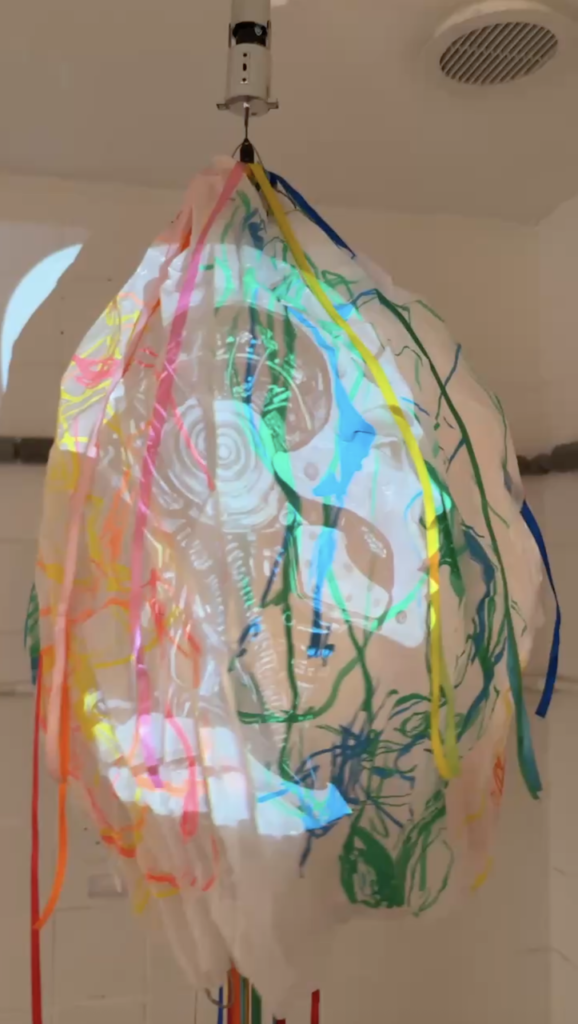
“The unconcious activities of the mind” is the piece, which I have created without planning to make something specific, inspired by meditative flow of consciousness, which happens to me when I’m running and the body stops fidgeting and is not in the minds way, it allows the mind’s stream of consciousness(train if thought) to flow uninterrupted. The idea of the paper lamp came from the need of destruction of a drawing of a moving dancer on paper. Unhappy with the result I wanted to squash it and throw it away but then from the idea of squashing came the idea of forming, using wet paper on a gym ball, to memorize the round shape, and adding rainbow threads and ribbons as an ode to diversity and identity with polish folklore.
“The Unconscious Activities of the Mind” emerges from a process that mirrors what Freud describes in The Interpretation of Dreams as the mind’s nocturnal freedom—when thought detaches from intention, logic softens, and the unconscious begins to speak in its own visual language. I created this piece without premeditation, entering the same meditative flow of consciousness I experience when running. In that state, when the body stops interrupting and the mind is momentarily unguarded, ideas appear not as plans but as impulses—raw, symbolic, and associative, much like dream-thoughts condensed into images.
The genesis of the work lies in an initial dissatisfaction: a drawing of a dancer in motion that felt unsuccessful, unresolved. My first urge was destruction—to crumple it, erase it, forget it. But Freud reminds us that the very material we try to repress returns in disguised form. From the impulse to destroy came the impulse to transform. By soaking and reshaping the paper over a gym ball, I allowed the gesture of destruction to become a method of formation, echoing how the unconscious converts discarded fragments of waking life into the symbolic forms of dreams.
The resulting paper sphere – part lamp, part vessel – retains the memory of movement, but now diffused and abstracted, as if submerged in the dream-work. The surface is marked by tangled neon lines, traces of automatic drawing that echo the wandering pathways of thought when freed from control. From the top and bottom spill ribbons and threads in rainbow colours, referencing both the diversity of identity and the vibrant ornamentation of Polish folklore. These threads operate like dream symbols: playful, coded, connecting the personal to the cultural, the unconscious to inherited visual languages.
In this work, the collapse of a failed drawing becomes a metaphor for the psychic processes Freud describes—the shifting, reshaping, and recombining of thoughts into new forms. “The Unconscious Activities of the Mind” stands as an artefact of that inner movement: a sculptural dream-image born from impulse, refusal, memory, and reinvention.
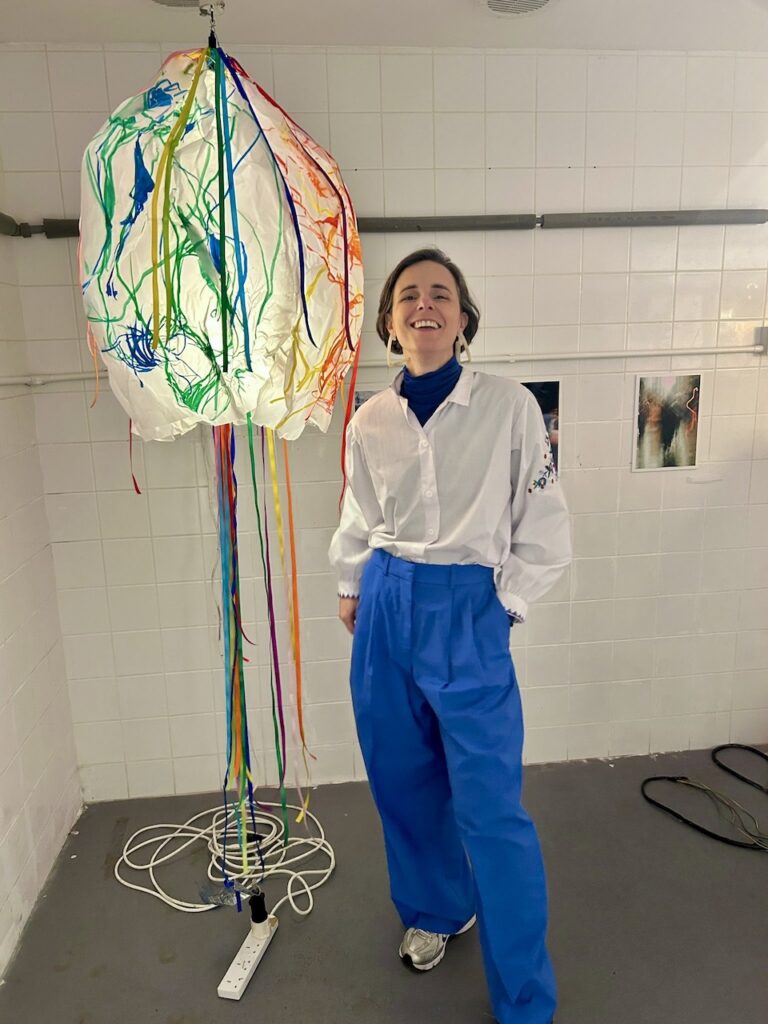
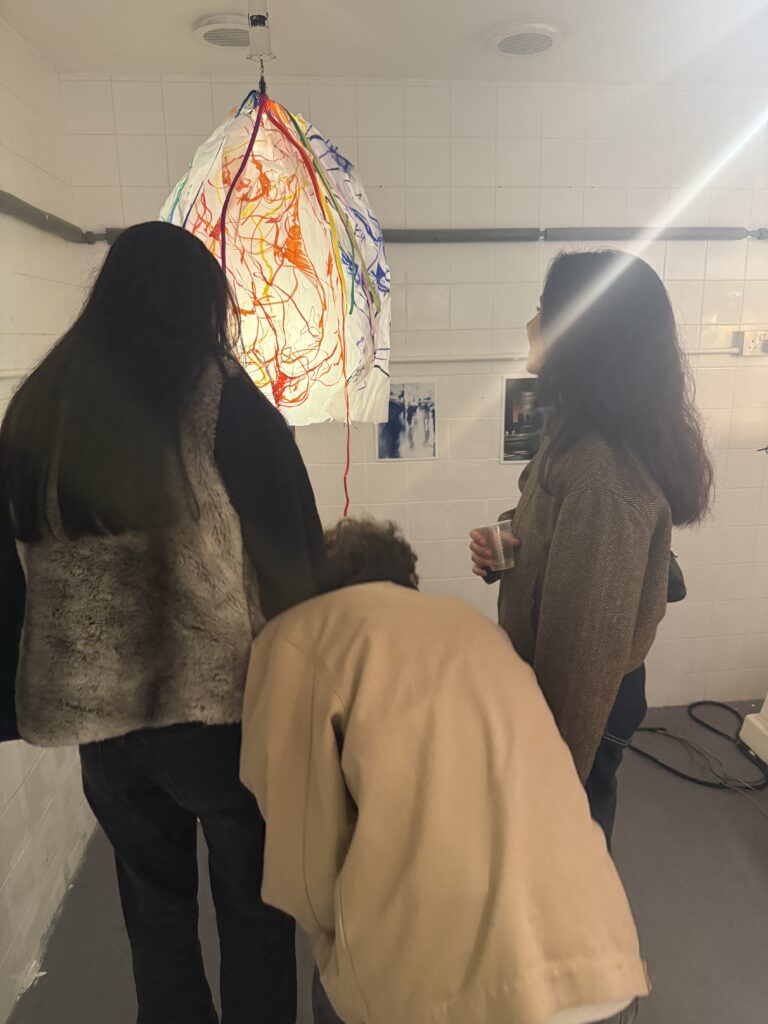
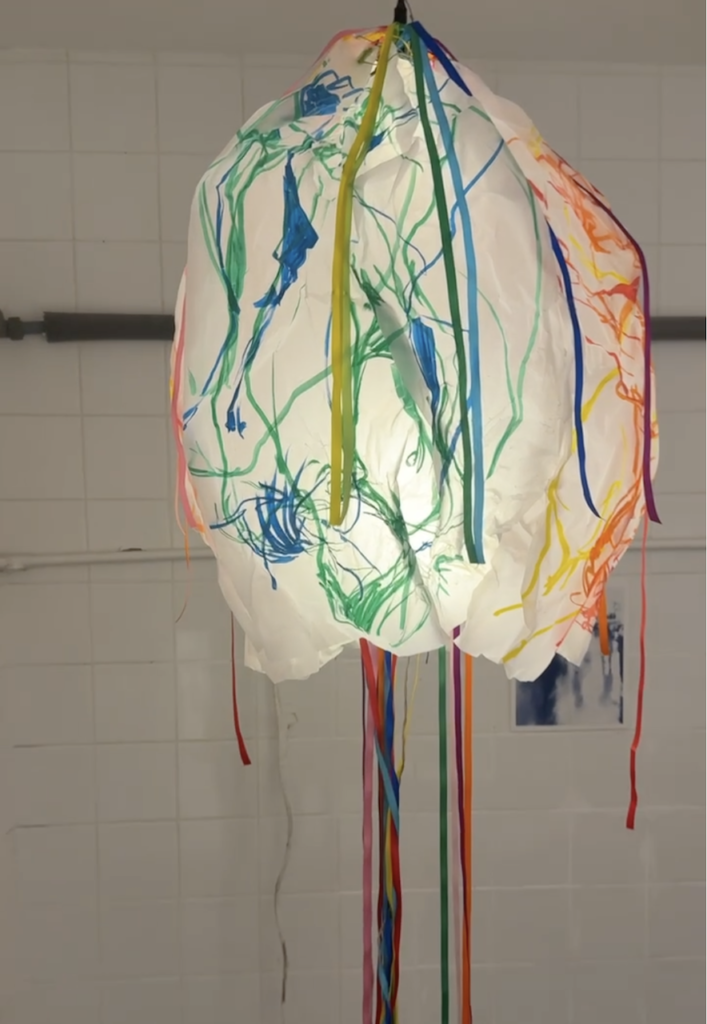
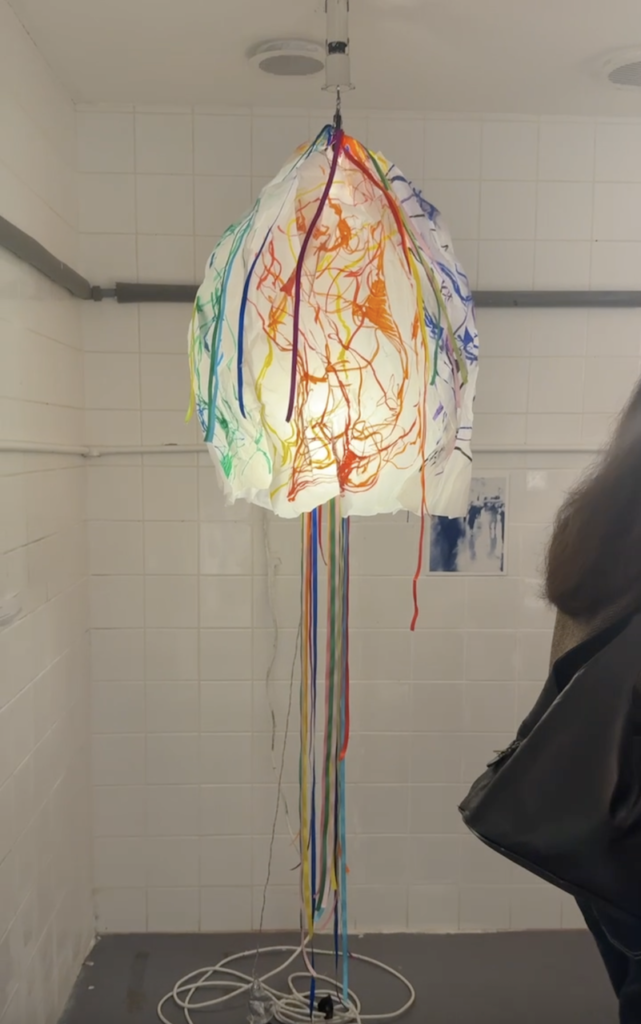
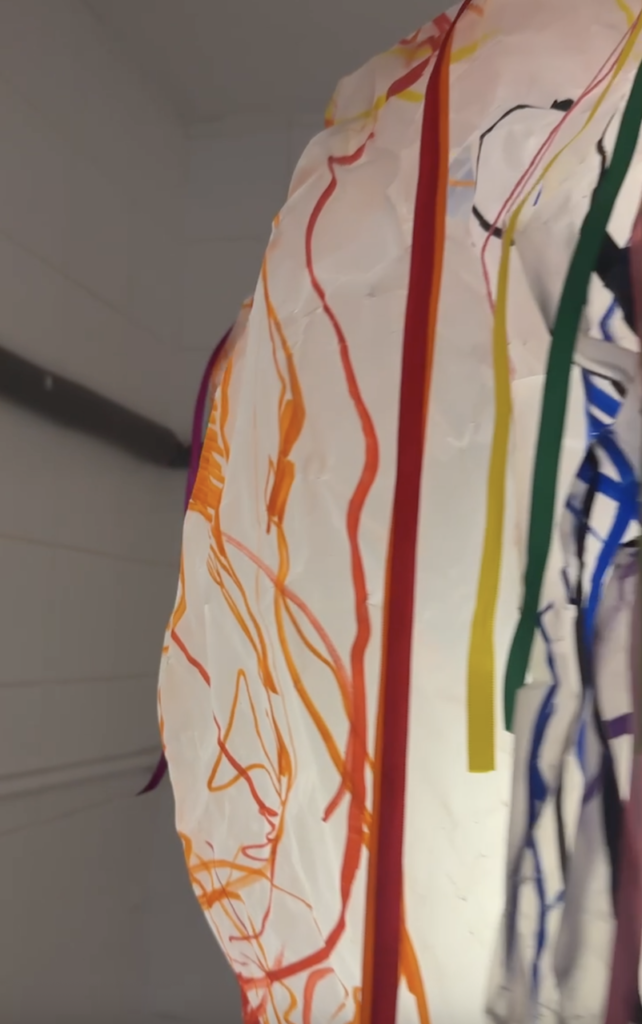
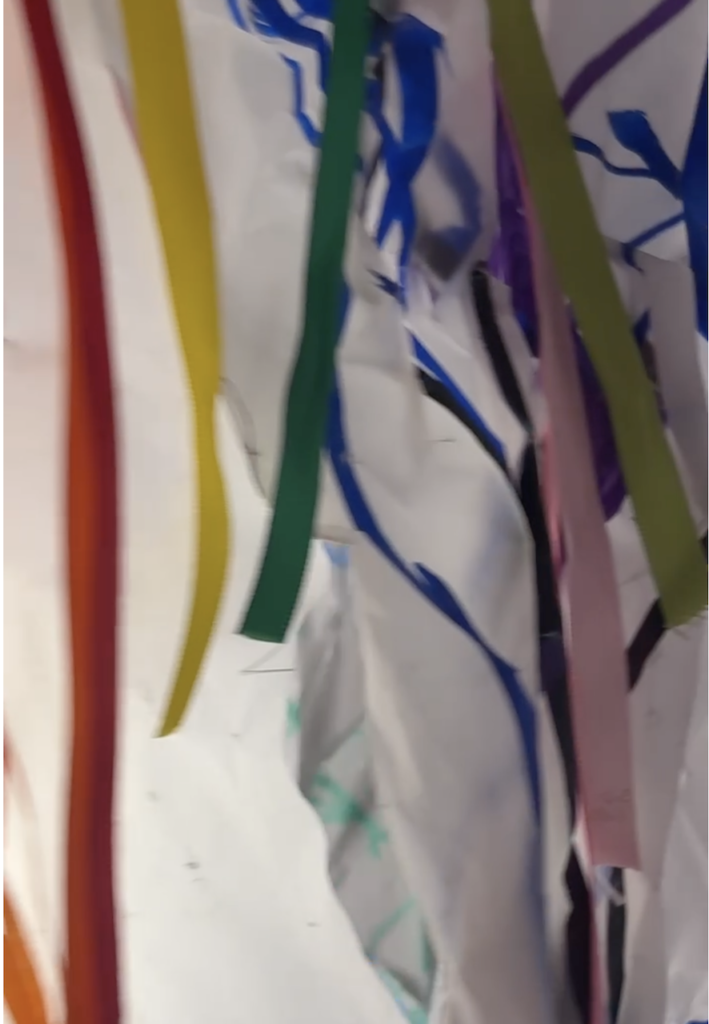
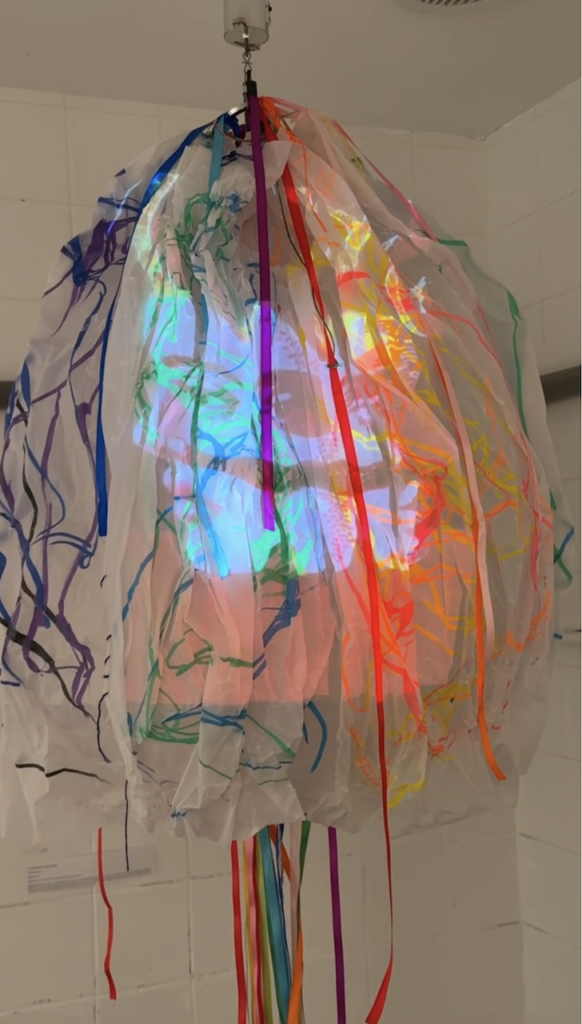
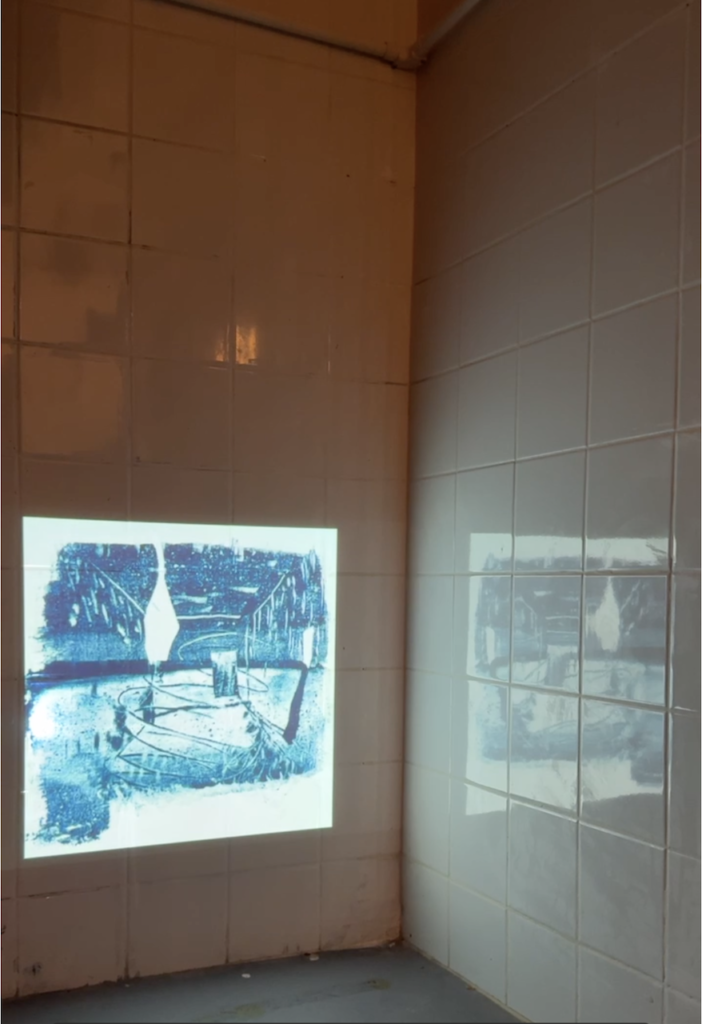

By looking back at these on 05.02.25 the strange image of me as a carer emerges: why do I care so much about making sure everything is fair to everyone? I really wanted the whole class to be able to participate in the Good Rice show and when I realised many works were ommitted and that none of the organisers seemed to care about the MAFAD class work being properly presented I genuinely got agitated and wanted to do everything that was in my power to make sure everyone else’s work was visible. Looking back now I am questioning: was it really my care for the others or a need to stroke my ego? Or both?
MISTAKES: cable from the fairy lights, which were placed inside the lamp got tangled with the ribbons while the rotating mechanism was on. I had to keep detangling it and in the end had to turn the rotating mechanism off.
LESSONS LEARNED: make sure to either have a battery operated light inside the lamp or if the lamps are attached cables then drop the idea of the rotating mechanism altogether or come up with a different solution
NEXT STEPS: figure out a different rotating mechanism, maybe a perpetuum mobile that only turns the lapm to a certain point one way and then starts to unwind itself. But for that I will need access to 3d Metal Workshop and/or Robotics(hint, hint Jonathan;)