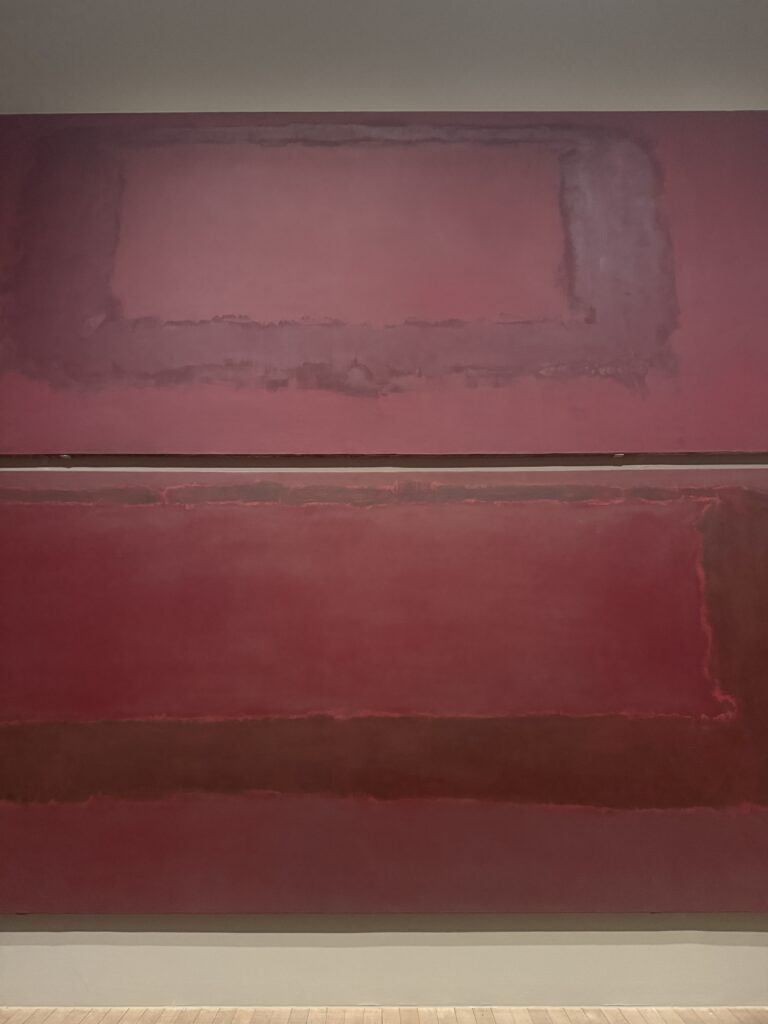
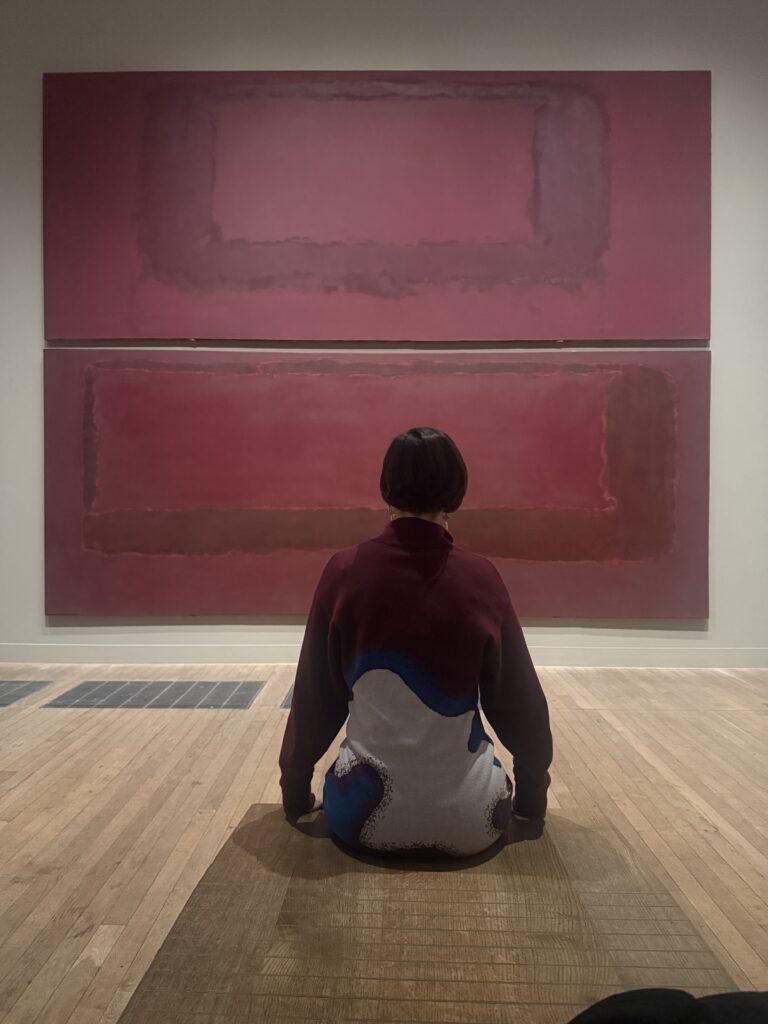
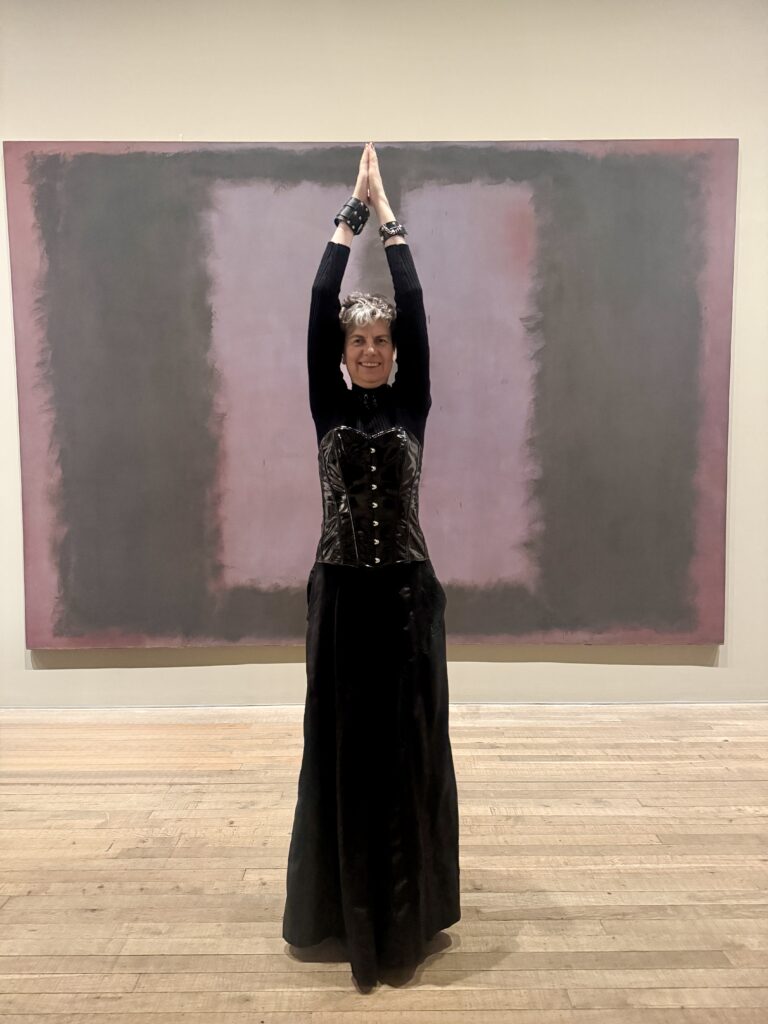
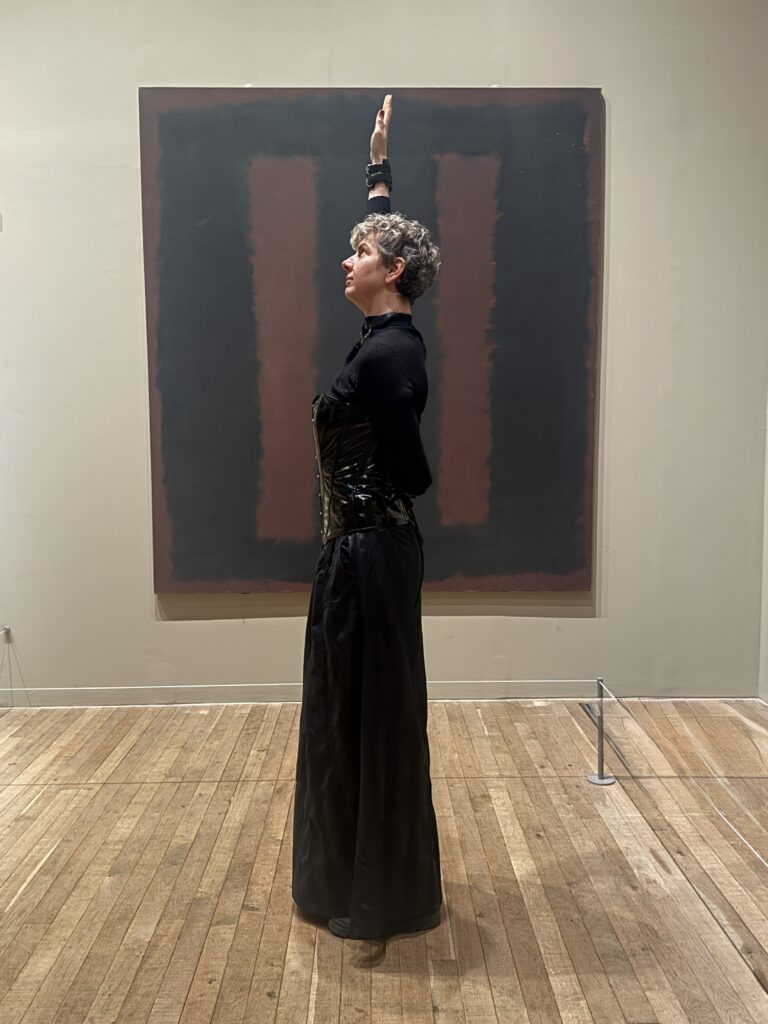
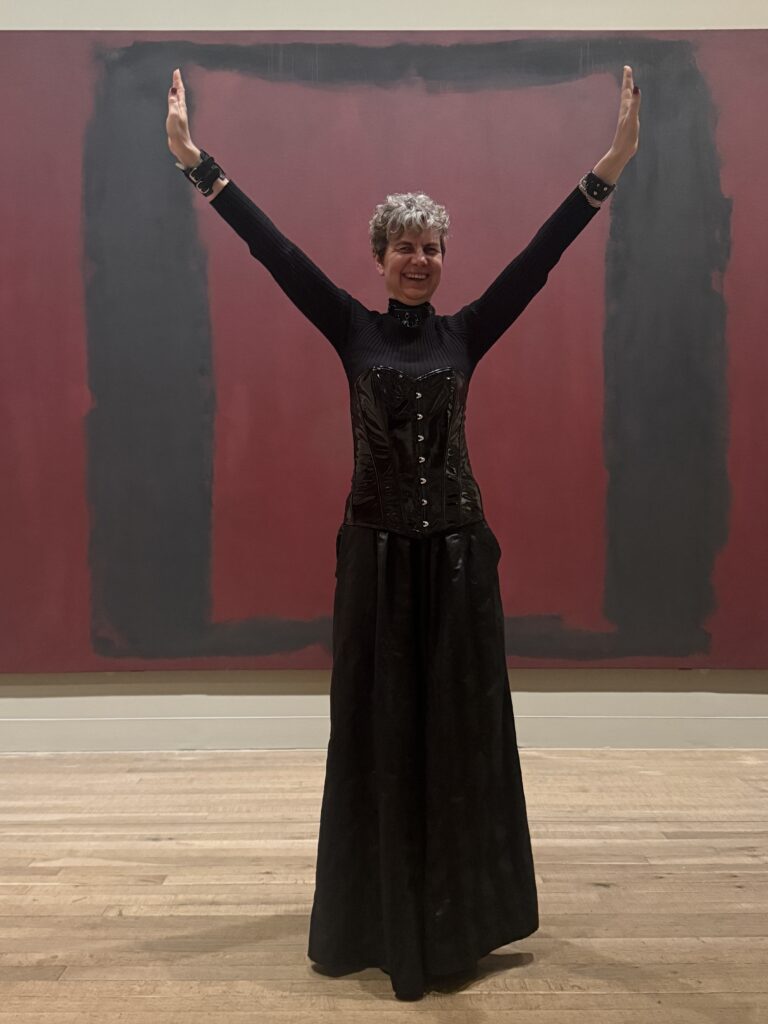
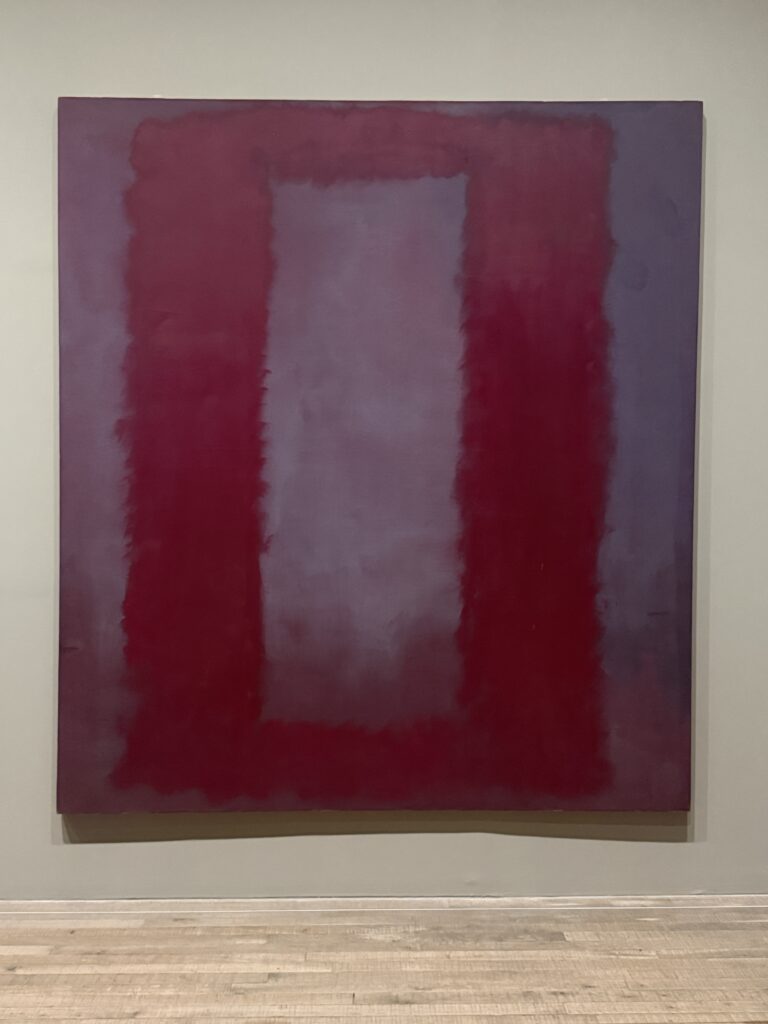
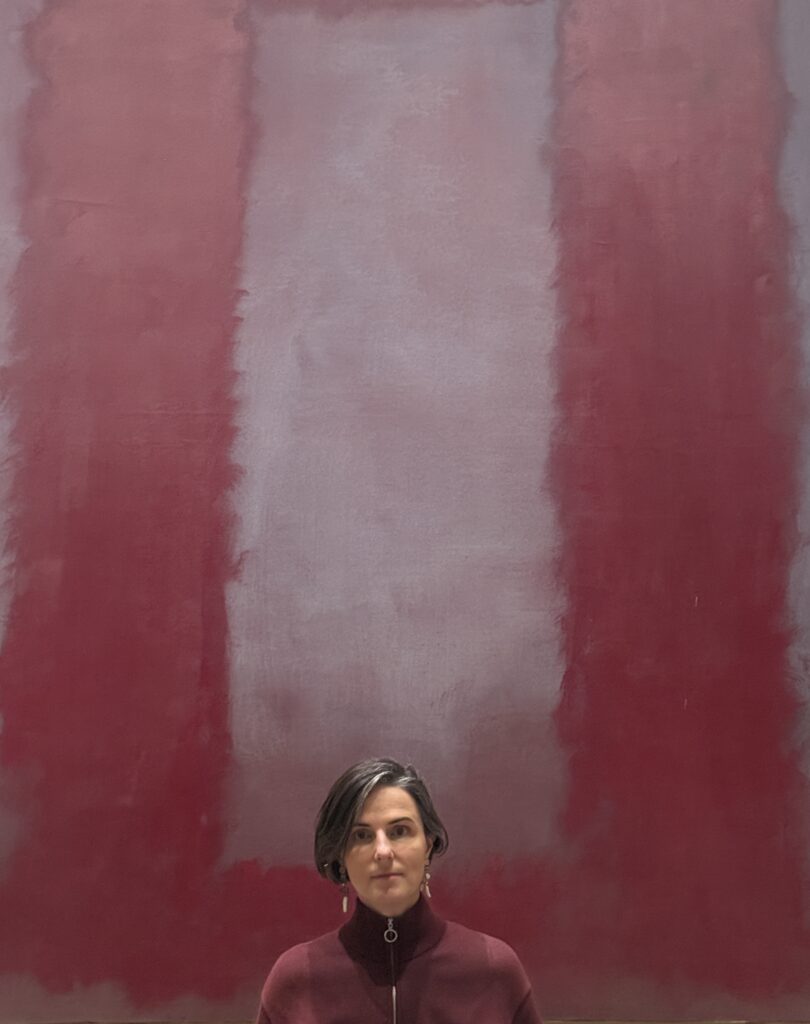
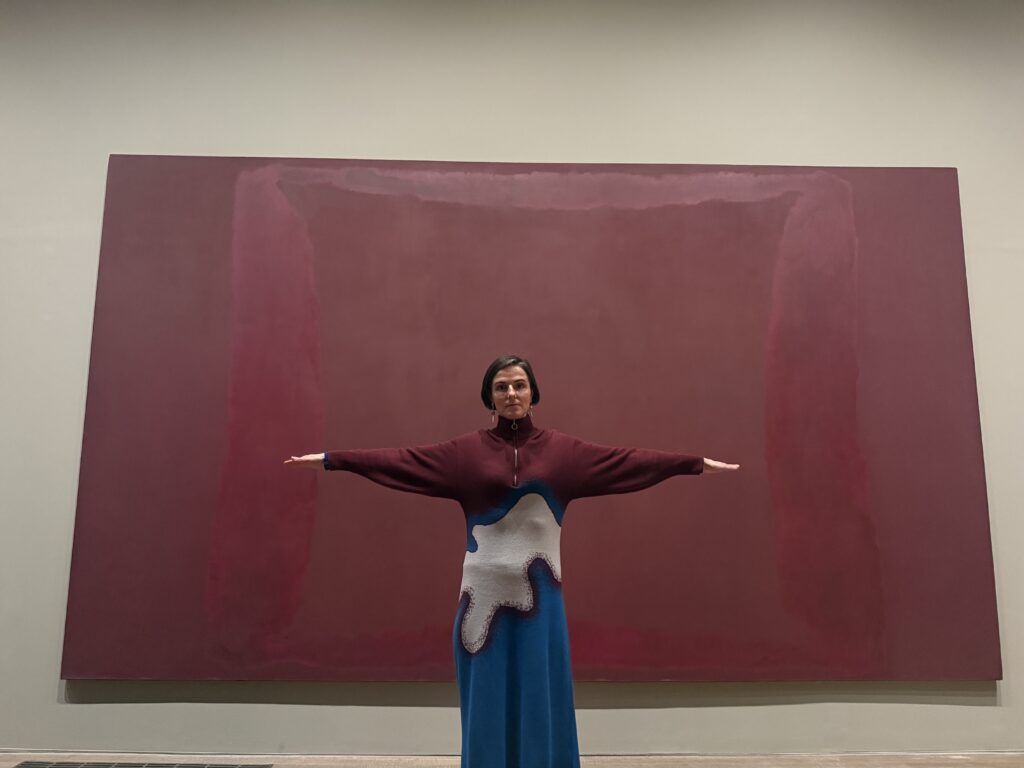
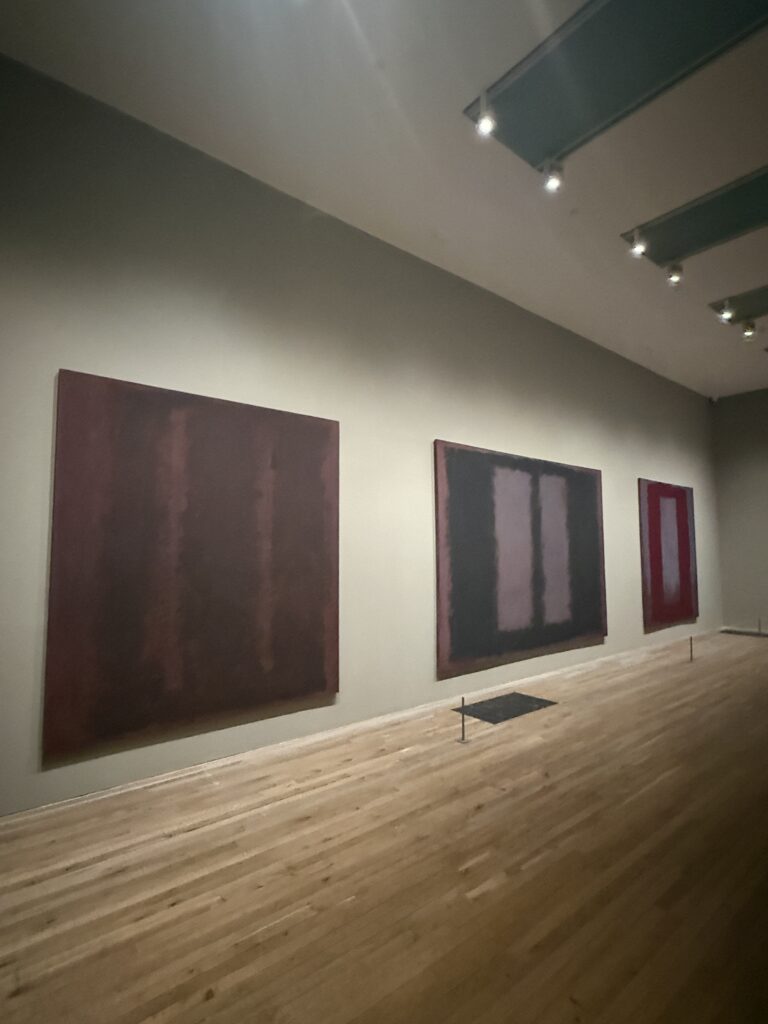
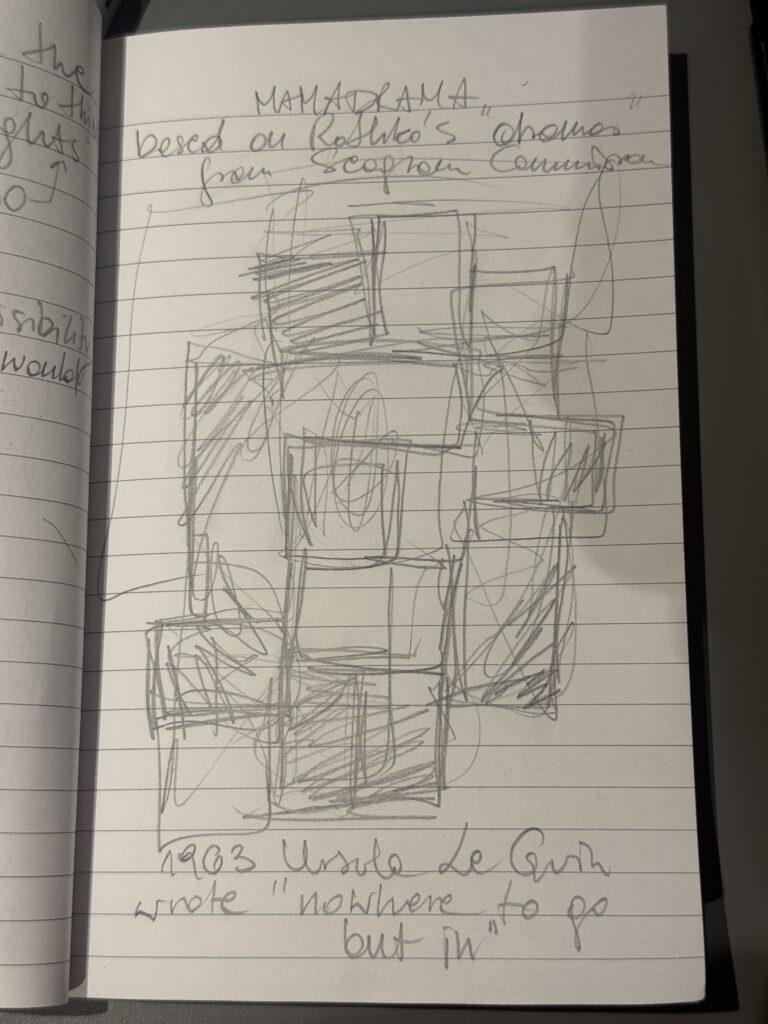
I went in not really knowing what to expect and I have a feeling I should have gone by myself rather than with a friend. We ended up interacting with the pieces and taking photographs posing because the colours of our clothes matched the paintings. There were other people there sitting quietly, sketching, writing, and I worried we looked like we didn’t take them seriously. Were we MOCKING? At the same time I wondered, is that what Rothko would have wanted? Serious and quiet meditation? Was that the purpose of the works? Or is it for everyone to feel what they want to feel? I did think it was the overwhelming monumentality of them that resonated with me. It made me want to add at least two times more fridges to my MAMADRAMA(or MOTHERCORE), which I decided to rename after realising that Rothko called his own paintings “dramas” and that truly resonates with the drama happening inside my overwhelmed mother mind when painting my abstracts on the fridge doors. But I feel I want to go back when I’m more depressed and check how differently looking at them might feel
Then I watched the 15min film on youtube dedicated to the Seagram Commission. Finding out Rothko was found dead in a pool of blood roughly the size of one of his paintings is making me feel something I find hard to describe. I want to go and see the paintings again, and check how am I going to feel when looking at them, knowing the story of the devastatingly unhappy person behind them. Knowing he was an immigrant, like me but also his approach “I’m interested only in painting basic human emotions – tragedy – ecstasy – doom and so on” so emotionally charged, similar to mine when working in my studio. There is something about him I want to explore deeper, ask more questions
Why “a painting is not a picture of an experience but it is the experience”?
How “viewing these paintings is an interacion between two people: Rothko and us”?
Why Rothko “never found peace” and even though he was an atheist why does the Seagram Murals project feel like a “temple” or a “shrine”?
In the words of Christopher Rothko, Mark’s son: “These works touch us because they know exactly “where we live”. They speak to us, imparting a message akin to “this is what it feels like to feel this way.” They are essentially the painted expression of what it is to be human and alive, filled with joy and sorrow, aspiration and despair, fears and hopes, and fears about our hopes.”
I feel there’s a connection between Bjork’s and Rosalia’s music I’ve been listening, my anger, rage and despair I felt in states of depression, Rothko’s paintings, Dyonisus and what I’m painting on fridge doors right now.